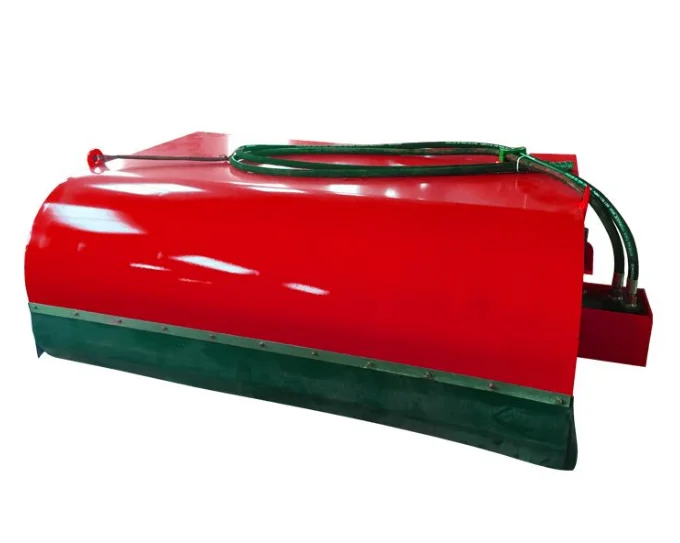
In the demanding environments of construction, agriculture, municipal services, and industrial facilities, maintaining clean and safe work areas is not merely a matter of aesthetics but a critical component of operational efficiency and compliance. Skid steers, known for their versatility and compact power, become even more indispensable when equipped with the right attachments. Among these, the pick up broom for skid steer stands out as a fundamental tool for debris management. This specialized attachment transforms a standard skid steer into a highly effective sweeping machine, capable of tackling everything from fine dust and sand to gravel, construction debris, and light snow. The integration of a hydraulic drive system ensures robust and consistent performance, allowing operators to clear large areas quickly and thoroughly. Investing in a high-quality pick up broom attachment is an investment in productivity, safety, and the longevity of your equipment. It minimizes manual labor, reduces the risk of tire damage to other vehicles, and helps maintain a professional appearance on any job site. The ability to efficiently collect and contain debris within its integrated hopper significantly streamlines the cleanup process, preventing dispersal and reducing the need for subsequent passes. As operations become increasingly reliant on efficient resource utilization, understanding the nuances of these attachments becomes paramount. This comprehensive exploration delves into the technical prowess, economic benefits, comparative market analysis, and real-world applications of modern skid steer brooms, equipping professionals with the knowledge to make informed decisions that directly impact their bottom line and operational capabilities.
Unveiling Technical Advantages and Engineering Superiority
Modern pick-up brooms for skid steers are engineered with a suite of technical advantages designed to maximize performance, durability, and operator convenience. At their core, these attachments feature robust construction, typically utilizing heavy-gauge steel for the main frame and hopper, capable of withstanding harsh working conditions and impact from various debris types. The hydraulic drive system is a key differentiator, providing consistent power to the poly or poly/wire brush assembly. Advanced hydraulic motors are often optimized for efficiency, ensuring maximum torque output while minimizing energy consumption from the skid steer's auxiliary hydraulics. Brush design is another critical area of innovation; high-density bristles are strategically angled to sweep material effectively into the integrated collection hopper. Many models feature adjustable brush pressure, allowing operators to fine-tune sweeping aggressiveness based on the surface and type of debris, thereby extending brush life and optimizing cleaning performance. Furthermore, quick-attach mounting plates are standard, enabling rapid attachment and detachment from various skid steer models, enhancing fleet versatility. Integrated water spray systems are increasingly common, designed to suppress dust during sweeping operations, significantly improving air quality on the job site and enhancing visibility for the operator. These systems typically include a large water tank and strategically placed nozzles. Other sophisticated features might include heavy-duty casters for smooth maneuverability, reversible cutting edges on the leading edge of the hopper for scraping packed material, and easy-to-access grease points for simplified maintenance. The structural integrity, combined with these thoughtful engineering details, ensures that contemporary skid steer brooms deliver reliable, high-performance cleaning solutions across a spectrum of demanding applications, translating directly into reduced downtime and increased operational output.
Quantifying Performance: Data Impact and Operational Savings
The strategic deployment of a high-performance skid steer pick-up broom yields tangible operational savings and significant data-backed improvements in efficiency. Consider a typical construction site where debris accumulation is constant. Manual sweeping of a 10,000 sq ft area by a crew of two workers might take 4-6 hours, equating to 8-12 man-hours per cleanup. In contrast, a skid steer equipped with a 72-inch pick-up broom can clear the same area in approximately 30-45 minutes. This represents an astonishing time saving of over 90%, freeing up valuable labor for more specialized tasks. Furthermore, the cost of labor, including wages, benefits, and associated overheads, can be substantial. For instance, if labor costs $30/hour, the manual task costs $240-$360. The skid steer broom operation, factoring in fuel and operator wages, might cost $60-$90 for the same task, resulting in an immediate 75% reduction in direct cleanup costs. Beyond labor, reduced debris on site directly translates to decreased incidents of tire punctures and damage to other expensive machinery. Industry data suggests that tire damage on construction sites accounts for 15-20% of all equipment maintenance costs annually. By consistently removing sharp objects, a skid steer broom can cut tire-related downtime and replacement costs by 30-50%, leading to thousands of dollars in annual savings for larger fleets. Moreover, the enhanced cleanliness contributes to a safer working environment, potentially reducing accident rates and associated liabilities. Dust suppression systems, common on advanced broom models, can reduce airborne particulate matter by up to 70%, improving air quality for workers and neighbors, and aiding compliance with environmental regulations. The combined effect of improved labor efficiency, reduced maintenance, and enhanced safety positions the skid steer pick-up broom as a powerful asset, demonstrating a rapid return on investment, often within the first few months of operation. This data-driven impact underscores its value not just as a cleaning tool, but as a strategic investment in operational excellence.
Navigating the Market: A Manufacturer Comparison
The market for skid steer pick-up brooms is robust, offering a wide array of options from various reputable manufacturers, each with unique features, specifications, and price points. Choosing the right broom involves evaluating factors such as sweeping width, hopper capacity, brush type, hydraulic flow requirements, and overall build quality. Below is a comparative table highlighting key specifications of popular models from leading manufacturers, providing a clearer picture of the diverse offerings available:
Manufacturer/Model | Sweeping Width (inches) | Hopper Capacity (cu ft) | Brush Diameter (inches) | Hydraulic Flow (GPM) | Notable Features | Estimated Price Range (USD) |
Bobcat SB Series | 60-84 | 10-20 | 26 | 15-25 | Reversible cutting edge, optional water kit, heavy-duty poly/wire brushes, direct drive. | $5,500 - $9,500 |
John Deere AB Series | 60-84 | 12-22 | 26 | 15-28 | Integrated water system option, large capacity hopper, heavy-duty steel construction, replaceable bolt-on cutting edge. | $6,000 - $10,000 |
Virnig V50 Series | 60-96 | 10-24 | 26-32 | 15-30 | Industrial-grade design, optional dust suppression, heavy-duty adjustable stands, direct drive motor. | $6,500 - $11,000 |
Paladin Bradco MB Series | 60-84 | 11-20 | 24-26 | 12-25 | Heavy-duty steel construction, internal dust suppression system, easy-to-change brushes, flow control valve. | $5,000 - $9,000 |
Edge (by CEAttachments) | 60-84 | 10-18 | 26 | 14-25 | Heavy-duty frame, high-capacity hopper, optional gutter brush, robust hydraulic motor. | $4,800 - $8,800 |
While this table provides a snapshot, it's crucial for buyers to delve deeper into specific model variations, warranty details, local dealer support, and compatibility with their existing skid steer's hydraulic flow and lifting capacity. Factors like the intended application (e.g., fine dust vs. heavy construction debris), frequency of use, and environmental conditions (e.g., need for extensive dust suppression) will heavily influence the best choice. Evaluating the total cost of ownership, including brush replacement costs and maintenance ease, should also be part of the decision-making process.
Tailored Solutions: Customization for Diverse Operational Needs
Recognizing that no two job sites or operational requirements are identical, manufacturers and aftermarket providers offer a myriad of customization options for skid steer pick-up brooms. These tailored solutions ensure that businesses can optimize their sweeping attachments for specific tasks, maximizing efficiency and extending the life of their investment. One primary area of customization revolves around brush types. While standard poly brushes are excellent for general-purpose sweeping, heavy-duty poly/wire mix brushes are preferred for more aggressive cleaning, such as removing packed dirt or construction debris embedded in asphalt or concrete. For extremely abrasive environments or fine material collection, specialized full-wire brushes might be available. Sweeping width is another crucial customizable feature, with options ranging from compact 48-inch models for tight spaces to expansive 96-inch units for large open areas like parking lots or runways. This choice directly impacts coverage efficiency and maneuverability. Dust control is paramount in many modern operations, leading to extensive customization in this domain. Integrated water spray kits, featuring various tank capacities and nozzle configurations, can be added to significantly suppress airborne dust. Some advanced systems even incorporate pressurized water for more effective dust management, or offer shrouds and seals to contain particulate matter. Furthermore, hydraulic power requirements vary, and some manufacturers offer options for high-flow hydraulic systems, catering to larger, more powerful skid steers for enhanced brush speed and torque. Additional features include optional gutter brushes for sweeping close to curbs and walls, magnetic bars for picking up ferrous metal debris (crucial in recycling or demolition), and specialized mounting plates to ensure perfect compatibility with unique skid steer models or quick-coupler systems. Even hopper configurations can be customized, offering different capacities or designs for easier dumping. Engaging with a knowledgeable dealer or manufacturer allows operators to specify these options, ensuring their skid steer broom is precisely configured to meet their unique challenges, delivering unparalleled performance and adaptability in diverse operational contexts.
Real-World Efficacy: Diverse Application Scenarios
The versatility of a skid steer pick-up broom makes it an indispensable tool across an extensive range of industries and applications, demonstrating its real-world efficacy in maintaining clean, safe, and productive environments. In the construction industry, these brooms are paramount for final site cleanup, preparing surfaces for paving, and maintaining access roads. After demolition or excavation, they efficiently clear rubble, loose dirt, and fine dust, ensuring a clean base for subsequent work phases. This not only speeds up project completion but also minimizes equipment wear and tear caused by debris. For municipalities and public works departments, skid steer brooms are critical for street sweeping, cleaning sidewalks, parking lots, and public spaces, especially after events, during seasonal changes, or following adverse weather conditions. They help remove sand, salt, leaves, and general litter, enhancing urban aesthetics and public safety. In warehousing and logistics, maintaining impeccably clean floors is essential to prevent product contamination, ensure safe movement of forklifts, and comply with health and safety regulations. Skid steer brooms efficiently collect dust, spills, and packaging debris, drastically reducing manual labor and improving operational flow. The agricultural sector benefits from these attachments for cleaning barns, feedlots, and livestock areas, as well as maintaining access roads on large farms. They effectively remove straw, feed remnants, and general agricultural waste, contributing to animal health and farm hygiene. For recycling centers and waste management facilities, brooms are vital for sweeping loading docks, processing areas, and transfer stations, where spills of various materials are common. They help keep operations running smoothly and safely by quickly containing and collecting loose debris. Even in mining operations, where heavy machinery generates significant dust and debris, skid steer brooms are used for maintaining haul roads and processing areas, ensuring clearer pathways and safer working conditions. Each of these scenarios underscores the broom's capacity to adapt and perform, significantly contributing to operational excellence, safety, and environmental compliance across a diverse spectrum of professional settings. Their ability to deliver consistent, high-quality results in challenging conditions solidifies their status as essential equipment.
Selecting the Optimal Pick Up Broom for Your Skid Steer: A Concluding Guide
Choosing the ideal pick up broom for your skid steer is a pivotal decision that directly impacts operational efficiency, cost-effectiveness, and job site safety. As we've explored, the market offers a wide array of options, each with specific strengths designed for diverse applications. To make an informed choice, consider several key factors. Firstly, assess your primary application: will it be for general site cleanup, heavy construction debris, fine dust, or a combination? This will dictate the required brush type (poly, poly/wire, or wire) and hopper capacity. Secondly, match the broom's specifications, particularly hydraulic flow and pressure requirements, with your skid steer's auxiliary hydraulic capabilities to ensure optimal performance and prevent damage to either machine. Over-specifying or under-specifying can lead to inefficient operation or premature wear. Thirdly, evaluate the build quality and material construction. Heavy-gauge steel, durable welds, and robust hydraulic components are indicators of longevity and resilience in demanding environments. Fourthly, consider features that enhance operator convenience and safety, such as integrated dust suppression systems, easy brush change mechanisms, and sturdy caster wheels for maneuverability. Furthermore, compare manufacturers not just on initial purchase price, but also on the total cost of ownership, which includes brush replacement costs, maintenance requirements, and the availability of parts and service. Look for features like reversible cutting edges, which extend the life of the attachment's leading edge. Finally, always factor in the reputation of the manufacturer and the support offered by local dealers. A reliable dealer network can provide invaluable assistance with installation, training, and ongoing maintenance. By meticulously evaluating these elements, you can confidently select a pick up broom for skid steer that not only meets your immediate cleaning needs but also serves as a long-term, high-performing asset for your business, significantly enhancing productivity and ensuring cleaner, safer work environments for years to come.
Frequently Asked Questions about Skid Steer Pick Up Brooms
Q1: What is a pick up broom for a skid steer?
A1: A pick up broom for a skid steer is a hydraulic attachment designed to sweep and collect various types of debris, such as dirt, gravel, sand, and light construction waste, into an integrated hopper. It converts a standard skid steer into an efficient sweeping machine for cleaning job sites, roads, warehouses, and other large areas.
Q2: How does a skid steer pick up broom attach to the machine?
A2: Most skid steer pick up brooms utilize a universal quick-attach mounting plate. This standard interface allows for quick and easy connection to the skid steer's arms, typically secured with pins or levers, and then connected to the auxiliary hydraulic lines for power.
Q3: What types of brushes are available, and which should I choose?
A3: Common brush types include poly (for general sweeping, fine dust), poly/wire mix (for more aggressive sweeping, packed dirt, gravel), and full wire (for heavy-duty scraping and embedded debris). Your choice depends on the type of material you primarily need to sweep and the surface condition.
Q4: Do all pick up brooms for skid steers come with dust suppression?
A4: Not all models include dust suppression as standard. Many higher-end or industrial-grade brooms offer integrated water spray kits as standard or optional features. These systems significantly reduce airborne dust, improving visibility and air quality on the job site.
Q5: What maintenance is required for a skid steer pick up broom?
A5: Regular maintenance typically involves checking and lubricating grease points, inspecting brush wear and replacing worn brushes, checking hydraulic hoses for leaks or damage, cleaning the hopper, and ensuring the cutting edge (if present) is in good condition. Follow the manufacturer's specific guidelines.
Q6: Can a pick up broom for a skid steer be used in wet conditions?
A6: Yes, most skid steer pick up brooms can be used in wet conditions, though their effectiveness might vary slightly with extremely heavy, saturated debris. Water spray systems are specifically designed to work with water, aiding in dust control. Ensure proper drainage of the hopper and clean thoroughly after use in wet conditions to prevent rust.
Q7: What is the typical lifespan of the brushes on a skid steer broom?
A7: The lifespan of brushes varies significantly depending on the brush type, the material being swept, the aggressiveness of use (brush pressure), and the frequency of operation. Under normal use, poly/wire brushes might last hundreds of hours, but aggressive sweeping on abrasive surfaces will reduce this. Regular inspection is key to knowing when to replace them.
Post time: Nov-12-2025