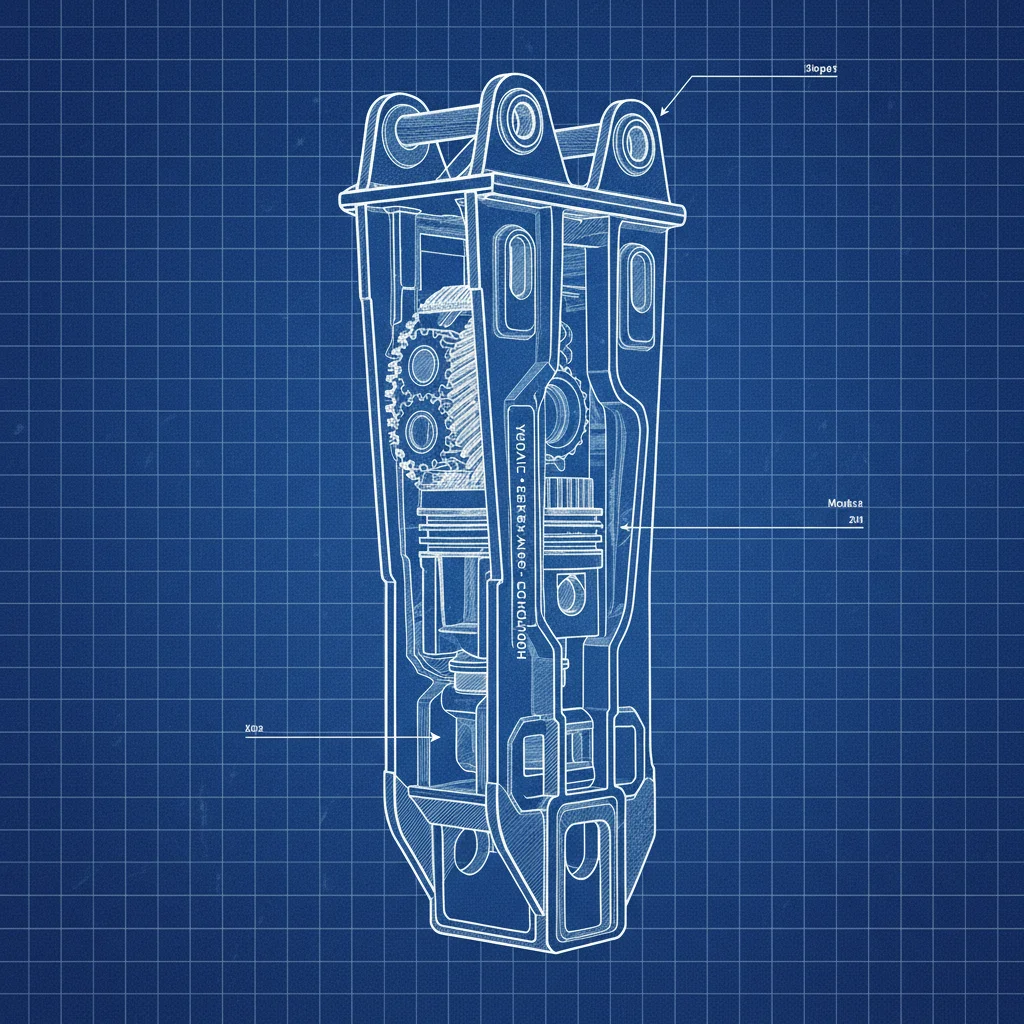
In the demanding world of urban demolition and construction site preparation, the efficiency of material handling can make or break a project's timeline. A concrete pulveriser for excavator, or more accurately in the context of versatile grabbing tools, a high-performance grab bucket, serves as a critical bridge between raw power and precision. By integrating digging and grabbing capabilities into a single attachment, operators can significantly reduce the downtime associated with switching tools.
Globally, the construction industry is shifting toward "multi-tool" attachments to maximize the ROI of heavy machinery. Whether dealing with reinforced concrete debris or large timber, the ability to securely grasp and move materials without constantly repositioning the excavator arm is a game-changer. This evolution in attachment design addresses the chronic inefficiency of using separate thumbs and buckets, which often requires awkward maneuvering to align the jaw with the load.
Understanding the technical nuances of these attachments—from the metallurgy of the bucket body to the hydraulic pressure requirements—allows fleet managers to optimize their equipment for the toughest conditions. By choosing an attachment that balances loading capacity with reinforced durability, companies can ensure their excavators are capable of handling everything from soft dirt to hard rock and concrete fragments with ease.

The Versatility of Grab Buckets in Demolition
The primary advantage of a grab bucket, often sought after by those looking for a concrete pulveriser for excavator, is the seamless integration of the thumb directly onto the primary bucket. This design eliminates the need for the operator to adjust the bucket direction to cooperate with a separately attached hydraulic or mechanical thumb, allowing for immediate "catch-and-carry" actions.
Beyond simple grabbing, these tools are engineered for heavy-duty environments. While there is a slight trade-off in loading capacity compared to a standard GP bucket, the reinforcement of the bucket body allows it to function effectively as a stone grapple. This makes it an indispensable tool for moving large amounts of debris, grabbing heavy timbers, and digging ditches where precision gripping is required.
Engineering Excellence and Material Selection
Durability in demolition is non-negotiable. To ensure a long service life under extreme stress, a wide variety of high-strength steels are utilized. Depending on the application, operators can choose from Q355, Q690, NM400, or Hardox 450. Hardox 450, in particular, provides the superior abrasion resistance necessary when the attachment is used as a concrete pulveriser for excavator in abrasive environments.
To further extend the life of the tool, casting deputy blades are available, providing an extra layer of sacrificial wear protection. This ensures that the structural integrity of the main bucket body remains intact even after thousands of hours of scraping against reinforced concrete and jagged rock.
The integration of G.E.T. (Ground Engaging Tools) is another critical engineering factor. CAT J series teeth and adapters come as standard on Crafts buckets, though options for ESCO, Komatsu, and Volvo are available. This compatibility ensures that the bucket can be maintained with widely available parts, reducing machine downtime across different fleet brands.
Operational Efficiency and Handling Dynamics
When analyzing the workflow of a demolition site, the time spent repositioning the boom is a hidden cost. A high-quality concrete pulveriser for excavator design focuses on reducing these micro-movements. By having the thumb directly attached, the action of digging and grabbing is condensed into one fluid motion.
From a mechanical perspective, the synergy between the hydraulic thumb and the reinforced bucket body allows for the handling of heavier work conditions than a normal bucket/thumb combination. This is particularly evident when clearing large-scale concrete slabs or sorting mixed construction waste, where the grip strength must be matched by structural rigidity.
Furthermore, the ability to match various brands of excavators and backhoe loaders ensures that this efficiency is scalable across an entire project site. Whether using a mini-excavator for tight urban spaces or a heavy-duty machine for industrial teardowns, the operational logic remains the same: maximize the utility of every hydraulic cycle.
Comparative Performance Metrics
To understand the value of a specialized grab bucket versus traditional setups, we must look at performance ratings across several key categories. When used as a concrete pulveriser for excavator, the priorities shift from volume (loading capacity) to grip strength and structural durability.
The following data highlights how different configurations perform in real-world demolition scenarios, specifically focusing on the trade-off between capacity and the ability to handle hard materials.
Performance Analysis of Concrete Pulveriser for Excavator Variants
Global Application Scenarios
Across the globe, from the high-density urban centers of Asia to the expansive infrastructure projects in North America, the demand for versatile concrete pulveriser for excavator attachments is rising. In post-disaster relief operations, these tools are vital for clearing rubble and rescuing trapped individuals, where the ability to precisely lift a concrete block without shifting the surrounding debris is critical.
In remote industrial zones, such as mining sites or quarrying operations, these grab buckets are used to move oversized rocks and timbers. The reinforcement of the bucket body allows it to withstand the high-impact forces associated with rock handling, making it a reliable substitute for more expensive specialized grapples in many general-purpose scenarios.
Integration with Modern Quick Couplers
One of the most significant hurdles in attachment utility is the coupling mechanism. To ensure that a concrete pulveriser for excavator can be deployed quickly, it must be compatible with a wide range of systems. Crafts buckets are available in Wedge Lock, Pin-on, and S-Style configurations, catering to the various quick coupler standards used by global manufacturers.
This flexibility allows a contractor to move the attachment between different machines on the same site without needing specialized adapters. The precision fit of these couplings ensures that the hydraulic lines for the thumb are securely connected and that there is no "play" in the attachment, which is essential for maintaining accuracy during heavy lifts.
By standardizing the interface, the industry is moving toward a more modular approach to demolition. An operator can switch from a standard grading bucket to a grab bucket in minutes, allowing the machine to transition from site leveling to debris clearing without significant downtime.
Technical Specifications and Model Selection
Selecting the right model of concrete pulveriser for excavator depends entirely on the tonnage of the carrier machine and the specific requirements of the material being handled. For smaller 1-2 ton machines, a compact CGB01 provides the agility needed for residential demolition, while the CGB06 is built for 18-26 ton excavators tackling industrial-scale debris.
Key technical parameters such as operating pressure and flux are critical. For instance, the CGB06 requires an operating pressure of 160-180 Bar and a flux of 200 L/Min to ensure the thumb can exert enough force to crush or hold heavy concrete fragments. Matching these specs to the excavator's hydraulic output is the only way to ensure optimal performance and prevent system overheating.
Ultimately, the choice between different materials (e.g., Q355 vs. Hardox 450) and G.E.T. options allows for a tailored solution. A bucket used primarily for dirt and light debris can utilize standard steel, whereas a unit intended for heavy rock and concrete must be upgraded to the highest wear-resistant materials available.
Comparative Technical Specifications for Grab Bucket Series
| Model ID | Excavator Fit (Ton) | Jaw Opening (mm) | Op. Pressure (Bar) |
|---|
| CGB01 | 1 ~ 2 | 408 | 80 ~ 110 |
| CGB02 | 3 ~ 4 | 720 | 100 ~ 130 |
| CGB03 | 5 ~ 7 | 1160 | 110 ~ 140 |
| CGB04 | 8 ~ 10 | 1315 | 120 ~ 160 |
| CGB05 | 11 ~ 16 | 1615 | 150 ~ 170 |
| CGB06 | 18 ~ 26 | 2000 | 160 ~ 180 |
FAQS
A grab bucket integrates the thumb directly onto the bucket body, which removes the need for the operator to adjust the bucket's angle to align the load with the thumb. This significantly speeds up the digging and grabbing process, making it more efficient than using a separately mounted hydraulic or mechanical thumb.
For extreme abrasion and high-impact work, Hardox 450 is the recommended material. It provides superior wear resistance compared to Q355 or NM400, ensuring the bucket retains its structural integrity longer when used as a concrete pulveriser for excavator in harsh urban demolition environments.
Yes, Crafts grab buckets are designed to match various excavator and backhoe loader brands. They are available in Wedge Lock, Pin-on, and S-Style to ensure compatibility with different quick coupler systems, and standard CAT J series teeth are used for ease of maintenance.
Yes, there is a slight reduction in loading capacity compared to a standard General Purpose (GP) bucket because the thumb occupies some of the bucket's volume. However, this is offset by the added ability to grab stones, timbers, and debris, and the reinforced body allows it to handle tougher materials.
Selection is based primarily on the excavator's tonnage. For example, if you have a 12-ton machine, the CGB05 (suitable for 11-16 tons) is the correct choice. You should also verify that your machine's hydraulic pressure and flux match the operating requirements (e.g., 150-170 Bar for the CGB05).
While CAT J series teeth and adapters are standard, we offer various ground engaging tools to meet specific site requirements, including options for ESCO, Komatsu, and Volvo, ensuring your equipment integrates perfectly with your existing parts inventory.
Conclusion
The transition toward integrated attachments like the grab bucket represents a significant leap in construction and demolition efficiency. By combining the strength of a heavy-duty bucket with the precision of a hydraulic thumb, operators can execute complex digging and grasping tasks without the mechanical friction of tool changes. From the use of Hardox 450 steel for extreme durability to the flexible coupling options that fit diverse fleets, these tools are engineered to reduce downtime and increase the overall productivity of the excavator.
As urban infrastructure continues to be renewed and disaster recovery becomes more technically demanding, the need for versatile, high-strength tools will only grow. Investing in a high-quality concrete pulveriser for excavator or grab bucket is not just about buying a tool, but about optimizing the entire operational workflow for safety, speed, and reliability. We invite you to explore our full range of attachments and find the perfect match for your machinery. Visit our website: www.crafts-mfg.com