Grass Grapple Price Comparison: Commercial B2B Cost Guide
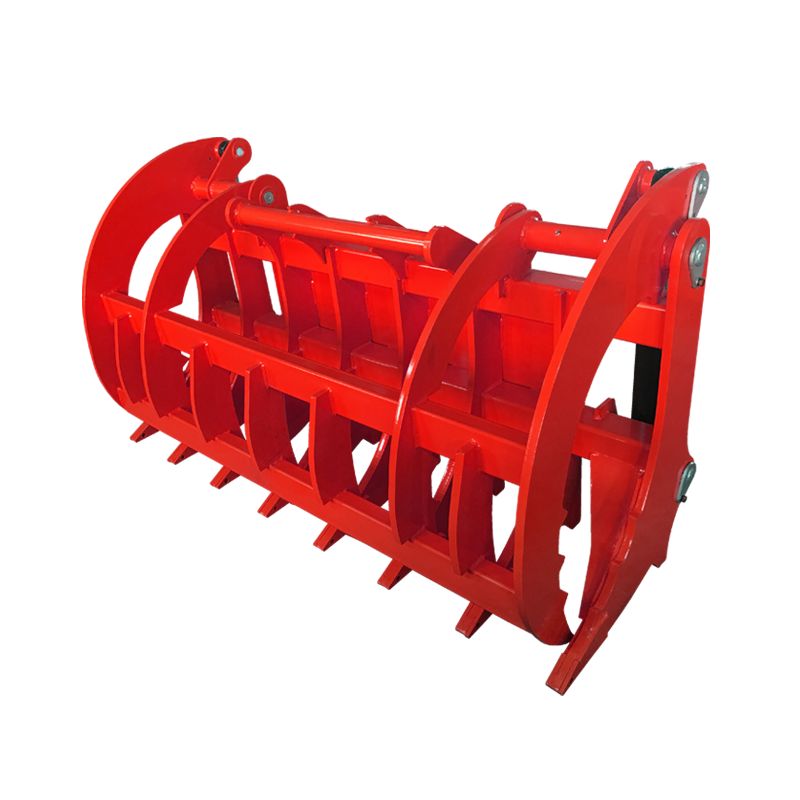
Capital allocation for commercial landscaping attachments relies on landed unit economics rather than upfront acquisition pricing alone. North American fleet directors and procurement managers balancing multi-season municipal maintenance budgets must evaluate structural longevity alongside initial purchase figures when selecting skid steer attachments.
Assessing the CGG series width tiers—specifically CGG-60 inch, CGG-72 inch, and CGG-84 inch models—requires a structured framework that factors in operational efficiency.
Fleet depreciation rates and maintenance overhead vary significantly across these working widths when deployed in intensive brush, log, and debris handling environments.
Total Cost of Ownership Analysis Across CGG-60, CGG-72, and CGG-84 Width Tiers
Capital allocation decisions for commercial landscaping fleets require evaluating multi-season performance through total cost of ownership rather than solely reviewing upfront acquisition pricing. When purchasing heavy-duty steel attachments for property and construction site maintenance, initial invoice figures hide downstream expenses tied to operational efficiency, structural wear, and frequency of replacement. Fleet managers balancing municipal maintenance budgets must weigh these long-term financial impacts before committing capital to specific working widths.
Operational efficiency varies across working widths during land clearing tasks. Matching the equipment footprint to job site clearing capacity directly influences labor utilization rates and machine cycle times. Below is a comparative structural overview of the available width tiers:
| Model | Application Scope | Quotation Status |
|---|---|---|
| CGG-60" | Landscaping and Lawn Care | Contact for quote |
| CGG-72" | Landscaping and Lawn Care | Contact for quote |
| CGG-84" | Landscaping and Lawn Care | Contact for quote |
Long-Term Maintenance Implications Across Working Widths
Maintenance overhead scales differently as the grapple width increases from the CGG-60 inch tier to the CGG-84 inch tier, particularly when handling abrasive logs and rocky construction debris. Wider attachments experience higher torsional stress during uneven load distribution, which can accelerate wear on pivot points and clamping arms. Procurement strategies that incorporate these projected maintenance cycles prevent unexpected fleet downtime and lower the total cost of ownership over the asset lifespan.
Multi-Season Capital Allocation Strategies
Multi-season asset deployment depends on selecting working widths that align with projected municipal workloads and utility vehicle lifespans. Investing in the correct model tier prevents premature mechanical fatigue and optimizes fleet utilization rates throughout varying operational cycles. Procurement teams balance initial capital expenditure with anticipated maintenance intervals to secure sustainable long-term value across all operating environments.
Heavy-Freight Shipping Overhead and Volumetric Cost Distribution
Volumetric Freight Calculations for Landed Cost Modeling
Transport expenditures for bulky steel attachments require integrating dimensional weight ratios directly into landed unit economics prior to order placement.
Heavy-freight shipping overhead scales in direct proportion to the physical footprint and gross tonnage destined for specific regional transport lanes. Importers and commercial distributors must incorporate these transit variables into the baseline financial model to prevent unexpected budget overruns during fleet acquisition.
Geographic Delivery Distance and Freight Density Impact
Shipping expenses fluctuate depending on whether the destination falls within regional transport lanes or long-haul cross-country distribution networks. Commercial buyers ordering multiple units across the available width tiers face variable freight charges driven by carrier capacity constraints and route distance.
- Regional transport routes typically feature lower base rates per hundredweight compared to transcontinental deliveries.
- Volumetric weight calculations apply when freight dimensions exceed standard density thresholds for flatbed or box trailer configurations.
- Port-to-warehouse drayage and final-mile liftgate services introduce supplementary accessorial fees depending on the delivery dock capabilities to be confirmed with the supplier.
Preventing Budget Overruns Through Comprehensive Financial Modeling
Integrating transport expenditures into initial procurement estimates eliminates discrepancies between invoice pricing and actual landed costs.
Fleet operators evaluating multi-unit orders must calculate freight allocations per attachment based on the specific delivery port and destination terminal requirements.
Aligning Grapple Width Selection with Prime Mover Track and Wheel Widths
Prime Mover Track and Footprint Calibration
Aligning grapple width selection with prime mover track and wheel widths optimizes operational clearing performance by ensuring that the attachment matches the carrier footprint during landscaping and construction site operations. When track paths and lateral attachment margins correspond directly, operators experience reduced lateral drift and improved steering response across uneven terrain on landscaping jobsites.

Preventing Uncollected Debris Margins
Proper width matching prevents uncollected debris margins during commercial landscaping operations, eliminating the need for secondary sweeping passes. Mismatched footprints leave stray brush along property boundaries, whereas correctly proportioned CGG-60", CGG-72", and CGG-84" units sweep the entire path swept by the loader tracks. To verify specific dimensional compatibility between custom prime mover models and the attachment options, documentation is available from the supplier.
Optimizing Debris Handling and Site Cleanup Efficiency
Operational Workflow Integration Across Width Variations
Debris clearance efficiency directly depends on matching the working width to designated site conditions. Landscaping professionals deploy the CGG series variants to clean up, rake, pile and load brush, logs, and debris in your property and construction site environments without altering base machine hydraulic configurations.
Clamping Geometry and Material Retention Mechanics
Grapple clamping structure performance determines the speed at which bulky organic matter is secured and transported across uneven terrain. Proper tine alignment prevents slippage during high-volume brush transport, reducing secondary handling passes and lowering overall labor costs on commercial municipal contracts.
Operational productivity improvements scale directly with the width tier selected for specific site clearing projects.

Managing Construction Site Debris and Material Sorting Operations
Active Site Material Consolidation Workflows
Active construction sites require systematic material handling workflows when timber piles are gathered and moved across varying terrain grades. Project execution efficiency improves significantly when skid steer attachments handle multiple waste streams without frequent tool changes.
Deployment across municipal property maintenance and site remediation projects depends on reliable clamping mechanisms to secure uneven organic loads during transport cycles. Attachment versatility directly minimizes reliance on secondary excavation or loading machinery on congested jobsites.
Mechanical Efficiency and Secondary Equipment Reduction
Heavy debris handling cycles generate bottlenecks when loaders must pause for manual sorting or clearance adjustments. Industrial grapple systems streamline these operations by combining rake, pile and load brush, logs, and debris functions into a continuous mechanical process.
- Raw timber waste and organic residues are consolidated into uniform transport bundles.
- Jobsite cycle times decrease as clearing and loading tasks merge into single-pass operations.
- Secondary equipment utilization rates drop across municipal and commercial remediation contracts.
Long-term asset productivity on demanding terrain depends heavily on matching regional vegetation density and debris volume to the specific operational profile of the selected unit model width, ensuring sustained mechanical stability.
Procurement Strategy and Fleet Capital Allocation for Commercial Attachments
Commercial Synthesis and Fleet Investment Metrics
Synthesizing total cost of ownership evaluations with heavy-freight logistics requires balancing upfront invoice figures against multi-season operational expenses. Fleet directors evaluating commercial attachment proposals must weigh volumetric shipping surcharges alongside structural longevity across specific work cycles.
Procurement strategies that incorporate landed unit economics prevent unexpected budgetary shortfalls during large-scale fleet deployments. Analyzing transit overhead patterns ensures that regional delivery distance does not disproportionately inflate the cost per deployed unit.
Width-Tier Selection Based on Operational Demands
Guiding municipal and landscaping managers toward the optimal attachment size relies on matching working widths with the specific prime mover footprint. Selecting the CGG-60 inch, CGG-72 inch, or CGG-84 inch model depends entirely on project scale, site clearance speed requirements, and prime mover track or wheel dimensions.
Under-sizing an attachment leaves uncollected debris margins, while over-sizing increases torsional stress on narrower prime mover frames during intensive material handling.
| Model Tier | Primary Application Fit | Key Selection Variable |
|---|---|---|
| CGG-60\" | Compact utility and tight municipal turf zones | Prime mover maneuverability and track width |
| CGG-72\" | General commercial landscaping and property maintenance | Balanced clearance speed and fleet versatility |
| CGG-84\" | Large-scale land clearing and construction site debris | High-volume clearing capacity and skid steer power |
Establishing a structured B2B evaluation framework allows procurement committees to review commercial quotation proposals objectively. Multi-unit purchasing agreements and regional distribution agreements depend on transparent landed cost calculations determined by destination ports and order volumes.
Frequently Asked Questions
Volumetric freight density and maritime or overland transit distances directly determine the final delivery overhead per unit for bulky chassis designs. Heavy-freight logistics quotations depend heavily on destination port proximity and trailer space utilization rates rather than just the item weight. Importers calculate these variable transport tariffs alongside base production costs to maintain predictable profit margins.
Matching the attachment footprint to the prime mover tracks prevents uncollected debris margins during land clearing operations. When working widths align properly with the skid steer or compact utility loader path, operators complete property cleanup passes without missing residual organic material. This dimensional parity reduces secondary cleanup passes and improves overall site productivity.
Effective retention mechanisms enable operators to rake, pile, and load brush, logs, and debris efficiently during property maintenance tasks. The structural geometry of the clamping tines secures bulky organic loads securely during transit across uneven terrain. This hydraulic retention capacity minimizes dropped material and speeds up loading cycles on commercial landscaping jobs.
Managing assorted structural remnants and timber piles demands robust grapple articulation to maintain control over irregular shapes. Operators working on active construction sites rely on dependable clamping force to transport heavy logs and scattered debris safely. Proper sizing ensures the attachment withstands recurring impact stresses without compromising cycle efficiency.
Procurement proposals require a comprehensive review of landed freight overhead, warranty coverage terms, and specific model dimensions. Decision-makers assess supplier quotations by cross-referencing available model variants against the operational demands of regional municipal contracts. Establishing a standardized evaluation matrix helps purchasing teams justify long-term capital investments for fleet replacement cycles.
Conclusion
Submitting finalized equipment specifications alongside destination postal codes enables accurate determination of landed logistics expenses across designated North American transit corridors.
Procurement teams aligning capital allocations for CGG-60", CGG-72", and CGG-84" models can secure itemized quotations tied directly to specific regional delivery distances and carrier scheduling variables.

Post time: Oct-22-2026