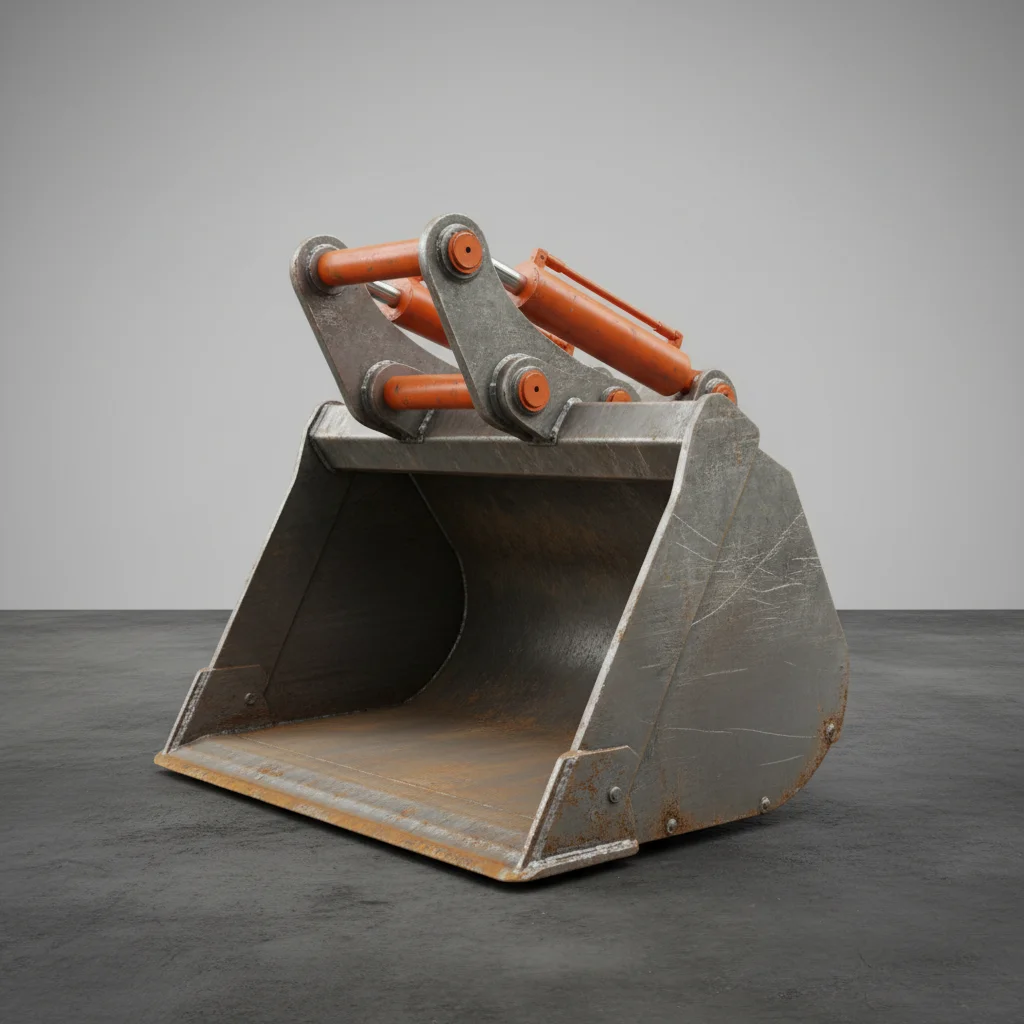
The global construction and mining landscapes rely heavily on the precision and durability of ground-engaging tools. For contractors and fleet managers, finding reliable excavator bucket manufacturers is not just about sourcing a piece of steel, but about ensuring that every cubic meter of earth moved is done with maximum efficiency and minimal downtime. The quality of the attachment directly impacts the operational cost and the longevity of the machine's hydraulic system.
In an era of rapid urban expansion and intensive mining, the demand for specialized attachments has evolved. Modern projects require tools that can handle diverse terrains, from soft clay to abrasive rock. This has pushed leading excavator bucket manufacturers to innovate with high-strength alloys and precision engineering, ensuring that buckets and couplers can withstand extreme pressures without premature deformation or failure.
Understanding the technical nuances of these attachments is critical for optimizing job site productivity. Whether it is selecting the right grade of Hardox steel or choosing a quick coupler that minimizes tool-change time, the expertise provided by experienced excavator bucket manufacturers ensures that equipment operates at peak performance. By focusing on material science and ergonomic design, these manufacturers enable operators to execute complex tasks with greater safety and speed.

The Role of Precision Engineering in Bucket Manufacturing
Precision engineering is the cornerstone of what distinguishes top-tier excavator bucket manufacturers from generic suppliers. The geometry of a bucket—its curvature, lip angle, and tooth spacing—determines the breakout force and the ease with which material is released. A poorly engineered bucket can cause excessive stress on the excavator's arm, leading to hydraulic leaks and structural fatigue over time.
By utilizing advanced CAD/CAM modeling, manufacturers can optimize the weight-to-strength ratio of the attachment. This ensures that the machine maintains its lifting capacity while maximizing the volume of material moved. When the fit between the bucket and the coupler is seamless, it reduces vibration and energy loss, directly translating to lower fuel consumption and higher hourly output.
Material Science and Durability Standards
The choice of material is the most critical factor in the lifespan of any attachment. Leading excavator bucket manufacturers utilize a spectrum of high-strength steels depending on the application. For standard earthmoving, Q355 or NM400 might suffice, but for abrasive environments like quarrying, Hardox 450 or Q690 are the industry benchmarks. These materials provide the necessary yield strength to prevent bending under heavy loads while offering superior abrasion resistance.
Beyond the shell of the bucket, the pins and bushings require specialized heat treatment to prevent galling and premature wear. The use of 45# steel is common for standard applications, but for high-stress environments, 40Cr and 20CrMuTi are employed. These alloys ensure that the connection points remain tight, preventing the "slop" or play that can compromise the precision of the dig.
Durability is not just about hardness, but also about toughness. A bucket that is too hard can become brittle and crack under impact, while one that is too soft will wear down quickly. The art of manufacturing lies in the balancing of these properties through controlled tempering and quenching processes, ensuring the tool can handle both the grinding of sand and the impact of boulders.
The Impact of Quick Couplers on Operational Efficiency
In modern construction, versatility is key. The integration of quick couplers has revolutionized how excavator bucket manufacturers design their product lines. A quick coupler acts as a mechanical wrist, allowing an operator to switch from a grading bucket to a rock bucket or a hydraulic breaker in seconds without leaving the cab. This eliminates the need for manual pin removal, which is both time-consuming and hazardous.
From an operational standpoint, the efficiency gained by using high-quality couplers provided by reputable excavator bucket manufacturers is immense. Instead of having three separate machines for three different tasks, a single excavator equipped with a variety of attachments can handle the entire workflow. This reduces the overall capital expenditure for the contractor and simplifies logistics on the job site.
Furthermore, the development of tilt quick couplers has added a new dimension of precision. These allow the operator to angle the bucket, making it significantly easier to create slopes or clean out ditches. This technological leap shows that excavator bucket manufacturers are no longer just producing "buckets," but are creating complex tool-management systems that enhance the capability of the base machine.
Matching Attachments to Machine Tonnage
One of the most common mistakes in equipment management is using an attachment that is not correctly matched to the machine's ton class. A bucket that is too large can overstress the hydraulic cylinders and reduce the breakout force, while one that is too small wastes the machine's potential. Professional excavator bucket manufacturers design their ranges to fit specific weights, typically spanning from 0.8t mini-excavators up to 36t heavy-duty machines.
Matching the flow and pressure requirements is equally vital, especially for hydraulic attachments like quick couplers. If the pressure (Mpa) or flow (L/min) of the machine does not align with the coupler's specifications, the locking mechanism may fail or operate sluggishly. This technical alignment ensures that the attachment becomes a natural extension of the excavator arm rather than a bottleneck.
Efficiency Rating by Attachment Compatibility
Global Applications in Mining and Construction
The versatility of attachments allows them to be deployed in vastly different global contexts. In urban infrastructure projects in Asia and Europe, compact excavators with grading buckets are used for precise trenching and landscaping. In these environments, the focus is on precision and minimal site disturbance, requiring attachments that are lightweight yet rigid.
Conversely, in the massive open-pit mines of Australia or South America, the requirements shift toward raw power and extreme wear resistance. Here, heavy-duty rock buckets and oversized couplers are the norm. In these remote industrial zones, the reliability of the tool is paramount; a single failure in a bucket pin can halt production for hours, costing thousands of dollars. This is why mining companies prioritize high-grade alloys and reinforced welding from their chosen manufacturers.
Overcoming Common Wear and Tear Challenges
Wear and tear are inevitable in the construction industry, but their impact can be managed. The most common failure points are the bucket teeth and the coupler locking pins. When these components wear down, the tool begins to wobble, which reduces digging accuracy and increases the risk of the attachment detaching unexpectedly. Regular inspection and the use of sacrificial wear plates are the primary defenses against structural degradation.
Another significant challenge is the accumulation of debris and corrosion in the hydraulic joints of quick couplers. In wet or salty environments, the steel can corrode, leading to seized pins. High-end manufacturers address this by utilizing galvanized coatings or specialized paint systems that protect the metal from the elements.
The solution to prolonged equipment life is a combination of quality procurement and proactive maintenance. By sourcing G.E.T. (Ground Engaging Tools) parts from the original manufacturer, users ensure that the metallurgy of the replacement part matches the original, preventing "hard spots" that can lead to uneven wear and premature failure of the bucket shell.
Technical Specifications for High-Performance Couplers
Analyzing the technical data of a quick coupler reveals the engineering intent behind the product. For instance, a coupler designed for a 0.8-2 ton machine will have a pin diameter of 25-30mm and operate at a pressure of 40-380 Mpa. This specific calibration ensures that the coupler can securely lock the bucket without putting undue stress on the mini-excavator's smaller hydraulic pumps.
As we move up the tonnage scale, the specifications scale proportionally. A coupler for a 25-30 ton machine requires a 90mm pin diameter to handle the massive shear forces encountered when digging into compacted rock. The flow rate, typically between 10-20 L/min, is optimized to ensure the locking mechanism engages and disengages rapidly while maintaining a secure hold.
Ultimately, these parameters are not arbitrary; they are the result of rigorous testing and field data. When users understand these specifications, they can make informed decisions about which attachment fits their specific machine and application, ensuring maximum safety and productivity on the job site.
Technical Specification Analysis of Excavator Quick Couplers
| Model Series | Pin Diameter (mm) | Ton Class (ton) | Operating Pressure (Mpa) |
|---|
| CFT-TQC02 | 25-30 | 0.8-2 | 40~380 |
| CFT-TQC04 | 35-40 | 3-4 | 40~380 |
| CFT-TQC06 | 45 | 5-6 | 40~380 |
| CFT-TQC09 | 50-55 | 7-9 | 40~380 |
| CFT-TQC15 | 60-65 | 10-15 | 40~380 |
| CFT-TQC30 | 90 | 25-30 | 40~380 |
FAQS
Most high-quality manufacturers use a range of steels based on the application. For general purpose work, Q355 or NM400 is common. For heavy-duty or abrasive environments, Hardox 450 or Q690 is used for the shell to ensure abrasion resistance. For critical pins and bushings, alloys like 40Cr and 20CrMuTi are utilized to prevent wear and deformation under high shear stress.
A quick coupler allows an operator to change attachments (e.g., from a bucket to a grapple) in a matter of seconds without leaving the cab. This drastically reduces downtime, improves safety by keeping the operator away from the attachment, and allows a single machine to perform multiple roles, reducing the need for additional equipment.
You must match the coupler to the ton class of your machine. For example, a machine in the 0.8-2 ton range needs a coupler like the CFT-TQC02 with a 25-30mm pin. Check your machine's hydraulic flow and pressure specifications to ensure they match the coupler's requirements (typically 40-380 Mpa) for safe and efficient operation.
While many couplers are designed for universality, it is essential to verify that the pin diameter and bracket dimensions match perfectly. Leading excavator bucket manufacturers design their couplers to be compatible with various brands, but any mismatch can lead to instability or failure. Always verify the technical drawing before installation.
The primary sign is "slop" or excessive movement in the bucket when it is attached. If you notice the bucket tilting or shaking more than usual during a dig, the pins and bushings have likely worn down. Replacing these early prevents the coupler's main body from wearing out, which is a much more expensive repair.
Not necessarily. If you are primarily moving loose soil or sand, standard Q355 steel is cost-effective and sufficient. However, if you are working with rock, concrete, or abrasive minerals, Hardox 450 is highly recommended. The initial higher cost is offset by a significantly longer lifespan and fewer repairs, lowering the total cost of ownership.
Conclusion
Selecting the right attachments and couplers from experienced excavator bucket manufacturers is a strategic investment that directly impacts the efficiency, safety, and profitability of any construction or mining operation. By focusing on the synergy between material science—such as the use of Hardox 450 and 40Cr steel—and precision engineering, operators can maximize their machine's breakout force while minimizing wear and tear. The transition toward quick-change systems has further empowered the industry, allowing for unprecedented versatility on complex jobsites.
Looking forward, the integration of smarter materials and perhaps semi-automated locking systems will continue to refine the relationship between the machine and its tools. For fleet owners, the key to long-term success lies in prioritizing quality over the lowest initial price, ensuring that every attachment is perfectly matched to the machine's tonnage and the environment's demands. To explore high-performance attachments and professional engineering solutions, visit our website: www.crafts-mfg.com