0%

Table of Contents

In the competitive landscape of modern construction and demolition, the versatility of machinery often determines the profitability of a project. adding hydraulic thumb to excavator transforms a standard digging tool into a precision gripping instrument, allowing operators to handle irregular debris, logs, and boulders with ease. This upgrade is no longer just an optional luxury but a strategic necessity for contractors seeking to maximize their equipment's utility.

Across the globe, the demand for specialized excavator attachments has surged as urban infrastructure projects become more complex. By integrating a hydraulic thumb, operators can perform tasks that previously required multiple machines or manual labor, significantly reducing cycle times and increasing site safety. Whether it is sorting recyclable materials or clearing land for new developments, the ability to grasp and move objects precisely is a game-changer.

Understanding the technical nuances and installation requirements of adding hydraulic thumb to excavator is essential for ensuring long-term durability and machine performance. From choosing the right hydraulic circuitry to selecting high-strength steel alloys, every detail impacts the efficiency of the operation. This guide explores the global industry context, technical components, and the long-term value this modification brings to the heavy machinery sector.
adding hydraulic thumb to excavator

Global Relevance of Adding Hydraulic Thumb to Excavator
adding hydraulic thumb to excavator

On a global scale, the construction industry is pivoting toward "multi-functional" assets to combat rising labor costs and stringent project timelines. The practice of adding hydraulic thumb to excavator aligns with ISO standards for machinery safety and efficiency, providing a mechanical solution to the challenge of material handling in volatile environments. In regions like North America and Europe, where demolition and recycling are heavily regulated, the precision offered by a thumb attachment is critical for separating waste streams at the source.

Moreover, in emerging markets across Asia and Africa, where infrastructure growth is rapid, the ability to adapt a single machine for multiple roles—from trenching to forestry—reduces the capital expenditure required for fleet procurement. This adaptability ensures that equipment remains productive across different project phases, reducing idle time and maximizing the return on investment for fleet owners.

Defining the Process of Adding Hydraulic Thumb to Excavator

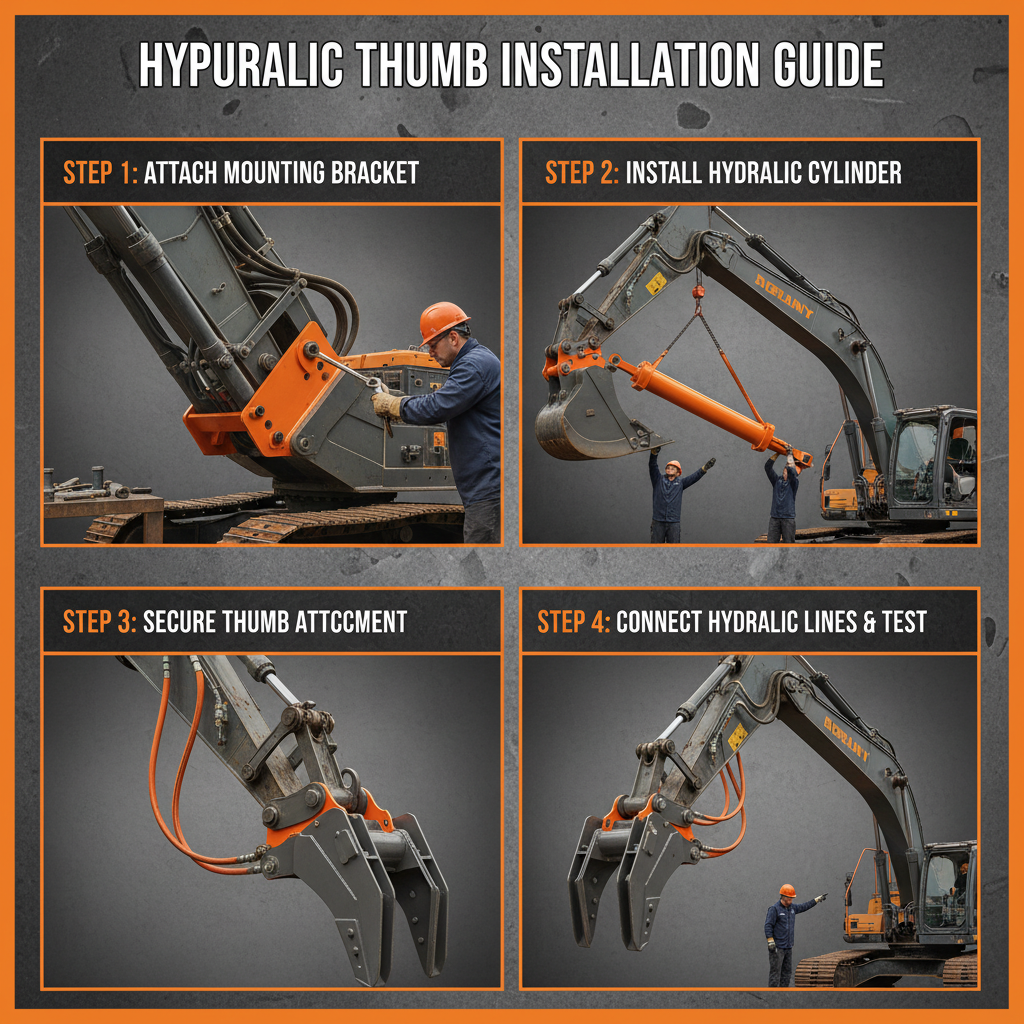
In simple terms, adding hydraulic thumb to excavator involves installing a hydraulically operated "finger" or clamp opposite the bucket. This allows the operator to pinch, grip, and lift materials rather than simply scooping them. It transforms the bucket into a powerful grapple, enabling the machine to pick up a single rock, a piece of rebar, or a heavy log with surgical precision.

From an industry perspective, this modification is a bridge between traditional earthmoving and advanced material handling. It addresses the fundamental limitation of a standard bucket: the inability to hold onto irregularly shaped objects. By adding this capability, the excavator becomes a versatile tool capable of complex tasks like precision placement of drainage pipes or the careful dismantling of concrete structures.

This process typically requires the installation of auxiliary hydraulic lines, a control valve in the cab, and a heavy-duty mounting bracket on the excavator arm. While the mechanical addition is straightforward, the integration into the machine's hydraulic system requires expert calibration to ensure that the gripping force is sufficient without overloading the pump or compromising the machine's stability.

Core Technical Components and Factors

The success of adding hydraulic thumb to excavator depends heavily on the quality of the materials used. High-tensile, wear-resistant steel is mandatory to withstand the constant abrasion and crushing forces encountered during demolition and rock handling. If the steel grade is insufficient, the thumb will succumb to fatigue and cracking, leading to costly downtime.

Another critical factor is the hydraulic integration. adding hydraulic thumb to excavator requires a dedicated hydraulic circuit that provides consistent pressure and smooth movement. The choice between a direct-acting cylinder and a pivot-style linkage determines the opening width and the gripping power, which must be matched to the specific bucket size and the typical weight of the materials being handled.

Lastly, scalability and compatibility are key. A well-engineered thumb system should be adaptable to various bucket types—whether it's a grading bucket or a rock bucket. Proper alignment of the pivot pins ensures that the thumb does not interfere with the bucket's full range of motion, maintaining the machine's original digging capabilities while adding the new gripping functionality.

Practical Application Performance Metrics

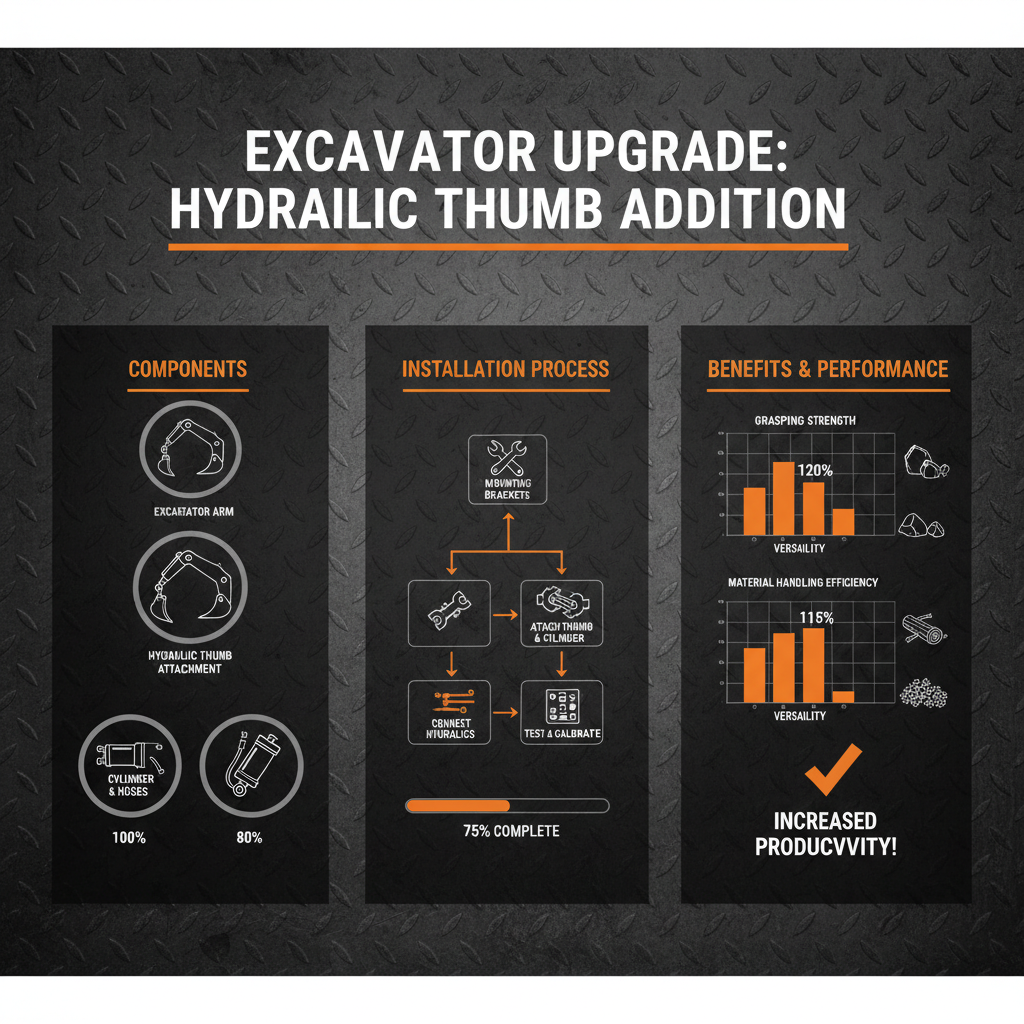
When evaluating the efficiency of adding hydraulic thumb to excavator, industry professionals look at a variety of performance indicators. These include the "cycle time reduction" (how much faster a load is moved compared to manual sorting) and the "material throughput" (the volume of debris processed per hour). In demolition settings, the precision grip allows for cleaner separations, reducing the need for secondary sorting.

The following data represents a comparison of different installation methods and their perceived effectiveness in real-world heavy-duty scenarios, focusing on durability and operational speed.

Performance Efficiency of Adding Hydraulic Thumb to Excavator Methods

Global Use Cases and Industrial Reach

The practical application of adding hydraulic thumb to excavator spans across diverse sectors. In the forestry industry of Scandinavia and Canada, hydraulic thumbs are indispensable for loading logs and clearing brush without damaging the surrounding ecosystem. The ability to grip a log securely ensures that materials are moved efficiently from the forest floor to the transport truck, minimizing soil disturbance.

In urban centers like Tokyo or New York, where "surgical demolition" is required to avoid damaging adjacent buildings, the thumb allows operators to pluck specific structural elements out of a building skeleton. This level of control is critical in post-disaster relief operations, where rescuers use thumb-equipped excavators to carefully remove debris from collapsed structures, ensuring the safety of survivors trapped beneath.

Long-Term Value and Economic Advantages

Investing in adding hydraulic thumb to excavator provides tangible economic benefits by diversifying the machine's revenue streams. A contractor can bid on a wider variety of projects—such as land clearing, scrap metal handling, and precision landscaping—without purchasing additional specialized equipment. This increases the machine's utilization rate and shortens the payback period for the initial investment.

Beyond the numbers, there is a significant impact on operator safety and morale. Manually sorting heavy debris is dangerous and exhausting; by utilizing a hydraulic thumb, the operator remains safely inside the reinforced cab, using intuitive controls to handle hazards. This reduces the risk of on-site injuries and improves the overall dignity and professionalism of the work environment.

Furthermore, from a sustainability perspective, the precision of a thumb attachment facilitates better on-site waste segregation. By separating concrete, steel, and wood more effectively during the demolition phase, companies can increase their recycling rates and reduce the volume of material sent to landfills, aligning their operations with global green building standards.

Future Innovations in Hydraulic Attachment Systems

The future of adding hydraulic thumb to excavator is being shaped by the digital transformation of heavy machinery. We are seeing the rise of "smart thumbs" equipped with pressure sensors that provide real-time feedback to the operator about the grip force being applied. This prevents the crushing of fragile materials and reduces the stress on the hydraulic system, extending the life of the component.

Automation and AI are also playing a role. Future systems may include semi-autonomous gripping patterns, where the excavator's onboard computer recognizes the shape of the object and automatically adjusts the thumb's position for the optimal grip. This would significantly lower the skill barrier for new operators and increase the speed of repetitive sorting tasks.

Additionally, the shift toward electric excavators is prompting a redesign of hydraulic components. New, high-efficiency electric-hydraulic actuators are being developed to replace traditional fluid-based cylinders, offering faster response times and zero leakage, which is crucial for environmentally sensitive work zones.

Comparison of Hydraulic Thumb Installation Specifications and Outcomes

Installation Type Setup Complexity Grip Strength (1-10) Long-term ROI
OEM Factory Integrated Low (Pre-installed) 10 High
Heavy-Duty Weld-on High (Requires Welding) 9 Medium
Bolt-on Kit Medium (Mechanical) 7 High
Quick-Change Thumb Medium (Adapter based) 8 Very High
Light-Duty Utility Low (Simple fit) 5 Medium
Custom Industrial Build Very High (Engineered) 10 High

FAQS

Does adding a hydraulic thumb void my excavator warranty?

It depends on the installation method. OEM-approved kits usually maintain the warranty. However, custom weld-on modifications to the boom or arm may void certain structural warranties. We recommend using certified installation partners and documenting the process to ensure you remain covered by the manufacturer's guidelines.

How much does adding a hydraulic thumb typically cost?

Costs vary based on the machine size and the type of thumb (bolt-on vs. weld-on). Generally, the investment includes the hardware, hydraulic lines, and labor. While the upfront cost can be significant, the increase in machine versatility usually results in a full return on investment within a few months of active use in demolition or forestry.

Can I install a hydraulic thumb on an older excavator model?

Yes, most older excavators can be retrofitted. The primary requirement is having an auxiliary hydraulic circuit. If your machine lacks one, a custom hydraulic pump and valve system can be installed. Many operators find that adding a thumb is the most cost-effective way to modernize an old machine and make it competitive again.

What is the difference between a hydraulic thumb and a mechanical thumb?

A mechanical thumb is usually operated by a cable or a fixed position, offering limited control. A hydraulic thumb is controlled directly from the cab via the machine's hydraulic system, providing far greater precision, stronger gripping force, and faster operation, which is essential for professional-grade demolition and material handling.

How often does a hydraulic thumb require maintenance?

Regular grease application to the pivot pins is required daily or every few shifts. Additionally, hydraulic hoses should be inspected weekly for wear or leaks. Because the thumb is a high-stress component, checking for hairline cracks in the welds every month is recommended to prevent catastrophic failure during heavy lifts.

Which material is best for the thumb: Cast or Fabricated steel?

Cast steel is generally superior for extreme heavy-duty applications due to its uniform strength and resistance to fatigue. Fabricated (welded) steel is more common and easier to repair in the field. For most construction tasks, high-grade fabricated steel is sufficient, but for quarrying, cast options are preferred.

Conclusion

Integrating a hydraulic thumb is one of the most impactful upgrades a machine owner can make, evolving a simple digger into a sophisticated material handling tool. By improving operational efficiency, enhancing site safety, and expanding the range of billable services, adding hydraulic thumb to excavator delivers long-term economic and practical value. From the precision required in urban demolition to the ruggedness needed in forestry, this attachment optimizes the synergy between man and machine.

As the industry moves toward smarter, greener, and more autonomous equipment, the evolution of hydraulic attachments will continue to drive productivity. We encourage fleet managers and owner-operators to evaluate their current equipment utilization and consider the strategic advantages of this modification. For those looking to upgrade their machinery with precision-engineered components, we invite you to explore our professional solutions. Visit our website: www.crafts-mfg.com
Kevin Davis

Kevin Davis

Kevin Davis is the Supply Chain Manager for North America at Xuzhou Crafts Machinery Equipment Co., Ltd. He oversees the logistics and distribution network, ensuring timely delivery of parts and attachments to customers across the US and Canada. Kevin’s expertise lies in optimizing the supply chain process, from sourcing materials to managing inventory. He’s instrumental in coordinating with our alliance of Chinese factories to provide a wide range of spare parts for road pavement construction machines. Kevin has over 10 years of experience in supply chain management within the manufacturing industry and is dedicated to efficiency and cost-effectiveness.
Previous High Quality Durable Excavator Thumb Attachments for Sale Online
Next High Quality Excavator Attachments for Construction Efficiency

If you are interested in our products, you can choose to leave your information here, and we will be in touch with you shortly.

  • captcha