Selecting the right demolition equipment often comes down to the reliability of the attachment and the transparency of the source. In the heavy machinery sector, the ability to break through reinforced concrete or hard rock depends not just on the tool's power, but on the engineering precision of its internal components.
Many operators face a recurring dilemma: balancing the high cost of original equipment manufacturer (OEM) parts with the unpredictable lifespan of generic alternatives. This struggle has shifted the market focus toward specialized hydraulic breakers suppliers who can provide a bridge between cost-efficiency and industrial-grade durability.
This report examines the technical criteria for evaluating breaker suppliers, the impact of material science on tool longevity, and how to align equipment specifications with specific site requirements to maximize operational uptime.

The Evolution of Hydraulic Breaking Technology

Hydraulic breaking has transitioned from simple pneumatic-style impacts to highly sophisticated energy-transfer systems. Early models relied on basic pressure spikes, but modern iterations utilize advanced gas-charged accumulators to amplify the strike force while reducing the vibration transferred to the carrier machine.
This evolution has been driven by the need for greater precision in urban demolition, where the goal is to destroy the target material without compromising the structural integrity of adjacent buildings. The shift toward integrated electronic monitoring has also allowed operators to adjust impact frequency in real-time.
Critical Engineering Factors in Breaker Design
The lifespan of a hydraulic breaker is fundamentally tied to the metallurgy of the striking piston and the tool steel used for the chisel. High-grade alloy steels, subjected to rigorous heat treatment, are essential to prevent premature fatigue and "mushrooming" of the tool tip. The precision of the cylinder bore is equally critical; even a micron-level deviation can lead to internal leakage and a significant drop in impact energy.
Seal technology represents another pillar of design. Modern breakers employ multi-stage sealing systems to prevent contaminants from entering the hydraulic chamber and to ensure that lubricant remains trapped within the striking mechanism. This is particularly vital in quarrying environments where abrasive dust is omnipresent.
Beyond the internals, the housing's ability to absorb recoil determines the wear rate of the excavator's boom and arm. Integrated dampening systems and optimized weight distribution help stabilize the carrier, allowing for more consistent perpendicular angles of attack, which maximizes the efficiency of every blow.
Evaluating Supplier Reliability and Technical Support
When vetting hydraulic breakers suppliers, procurement officers often mistake the lowest price for the best value. However, the true cost of ownership is measured in downtime. A supplier's ability to provide a rapid supply chain for wear parts—such as through-bolts, seal kits, and bushings—is more critical than the initial purchase price.
Technical compatibility is the primary risk factor; a breaker must be perfectly matched to the carrier's hydraulic flow and pressure ratings to avoid overheating the oil or damaging the pump.
Furthermore, the level of after-sales engineering support differentiates top-tier suppliers from mere traders. The ability to diagnose "blank firing" issues or provide guidance on the optimal tool geometry for specific rock types ensures that the equipment operates within its designed safety margins.
Performance Index Across Material Densities
The efficiency of a hydraulic breaker varies significantly depending on the compressive strength of the material. In soft limestone, high-frequency, lower-energy strikes are often more productive. Conversely, reinforced concrete and granite require maximum impact energy delivered through a moil or chisel point to create the initial fracture.
The following index illustrates the relative suitability of different breaker configurations based on material density and required penetration depth, providing a conceptual framework for equipment selection.
Figure 2. Relative Efficiency Index by Material Type
Application Scenarios and Operational Limits
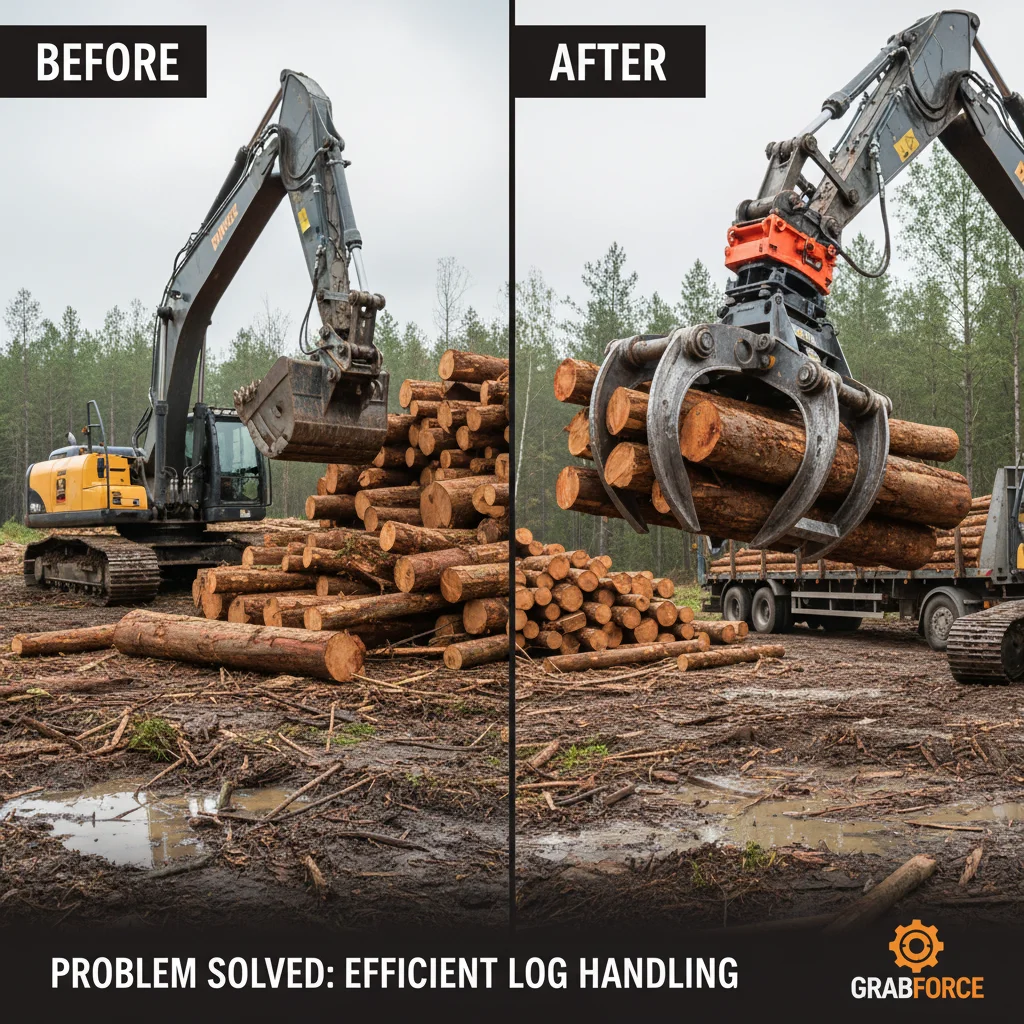
In a typical industrial setting, such as a highway expansion project, the breaker is often used in conjunction with other attachments. For instance, an excavator may switch between a rock bucket for debris removal and a hydraulic breaker for primary fragmentation. The transition between these tools highlights the importance of high-quality quick couplers to minimize downtime.
Operational limits are often exceeded when operators attempt to use the breaker as a pry bar. This lateral force puts immense stress on the tool shank and the internal bushings, leading to catastrophic failure. Maintaining a 90-degree angle to the work surface is the single most effective way to extend the life of the attachment.
Future Directions in Demolition Attachments
The industry is moving toward "smart" demolition. We are seeing the integration of sensors that monitor the temperature of the hydraulic oil and the vibration levels of the carrier arm. These systems can automatically throttle the impact rate to prevent overheating, a common cause of seal failure in high-ambient-temperature environments.
Sustainability is also influencing design. There is a growing demand for biodegradable hydraulic fluids and noise-reduction housings. In urban centers, "silent" breakers that use specialized dampening materials to reduce decibel levels are becoming a mandatory requirement for municipal contracts.
Furthermore, the synchronization between the carrier's ECU and the attachment is improving. Future systems will likely feature autonomous "auto-stop" functions that cease operation the moment a fracture occurs, preventing the energy waste and structural wear associated with blank firing.
Selection Framework for Industrial Procurement
Procuring a hydraulic breaker requires a systemic approach. It is not merely about the "power" of the tool, but the harmony between the carrier's capacity and the attachment's requirements. An oversized breaker will damage the machine's hydraulics, while an undersized one will result in poor productivity and excessive wear due to over-working.
Decision-makers should utilize a weighted matrix that considers not only the initial capital expenditure but also the projected cost of wear parts over a 2,000-hour operational cycle. This includes evaluating the availability of G.E.T. (Ground Engaging Tools) and the lead time for critical replacements.
The following framework provides a relative comparison of the factors that should influence the final selection based on the primary application environment.
| Application | Primary Factor | Tool Geometry | Risk Priority |
|---|---|---|---|
| Trenching | Penetration Speed | Chisel Point | Lateral Stress |
| Quarrying | Impact Energy | Moil Point | Abrasive Wear |
| Urban Demo | Noise Control | Blunt Tool | Vibration Limits |
| Mining | Durability | Heavy-Duty Moil | Seal Failure |
| Road Work | Versatility | Interchangeable | Cycle Time |
| Foundations | Precision | Conical Point | Overheating |
Questions & Answers
The most common cause is "blank firing," which occurs when the piston strikes the tool without any resistance from the material. This sends a massive shockwave back through the internal components, damaging the bushings and the piston. Additionally, operating at an incorrect angle introduces lateral forces that the tool is not designed to handle, leading to rapid shank wear.
A moil point is designed for general-purpose demolition and is best suited for softer rocks or concrete where penetration is the priority. A chisel point is narrower and provides higher concentrated energy, making it ideal for primary breaking of hard rock or creating fractures in reinforced concrete. The choice depends entirely on the material's compressive strength.
Excessive heat reduces the viscosity of the hydraulic oil, which can lead to internal leakage and a loss of impact power. More critically, high temperatures cause the rubber seals to harden and crack, allowing contaminants to enter the striking chamber. Regular oil cooling and the use of high-grade lubricants are essential for maintaining operational uptime.
No. A breaker must be compatible with the excavator's hydraulic flow (LPM) and operating pressure (Bar). If the flow is too high, the breaker may overheat; if it's too low, the piston will not achieve full strike velocity. Suppliers must verify the machine's nameplate data to ensure the attachment is within the carrier's safe operating envelope.
Specialized suppliers often provide a better balance of cost and performance by using similar high-grade alloy steels as OEMs but with lower overhead costs. The value lies in the ability to source compatible wear parts quickly without the extreme markups of brand-name manufacturers, provided the supplier has a proven track record in metallurgical quality.
Depending on the environment, the tool should typically be greased every two hours of active breaking. This reduces friction between the tool and the bushing and helps flush out abrasive dust. Failure to grease regularly leads to "seizing" of the tool, which can cause permanent damage to the internal housing.
Final Thoughts
The operational success of a demolition project depends less on the raw power of the equipment and more on the precision of its application. By prioritizing metallurgical quality and technical compatibility over the lowest initial price, companies can significantly reduce the total cost of ownership and avoid costly unplanned downtime.
As the industry moves toward smarter, more sustainable attachments, the role of expert hydraulic breakers suppliers will be defined by their ability to provide not just a tool, but a comprehensive maintenance and compatibility ecosystem.