The global demand for high-performance excavation attachments has surged as infrastructure projects become more complex and demanding. In the realm of land clearing and soil preparation, the efficiency of a digger flail head or a high-quality general-purpose bucket determines the speed of project completion and the overall operational cost. Understanding the synergy between the machine and its attachment is key to maximizing productivity in modern construction.
Across the manufacturing sector, particularly in specialized equipment for mining and building, the transition toward versatile attachments has allowed operators to switch tasks without changing machines. Whether dealing with moderately abrasive materials or precise digging tasks, the choice of metallurgy and coupler compatibility ensures that equipment remains durable under extreme stress. This evolution in machinery design minimizes downtime and maximizes the lifecycle of the excavator.
For professionals seeking the best results in dirt, sand, and clay excavation, selecting a tool like a digger flail head or a standard GP bucket is essential. By utilizing advanced materials such as Hardox 450 or NM400, these tools provide the necessary strength to handle loose rock and frost-covered soil, ensuring that the operator can maintain a steady workflow regardless of the environmental challenges.

Material Excellence in Digger Flail Head Design
The structural integrity of a digger flail head or general-purpose bucket depends heavily on the grade of steel used during fabrication. Standard options such as Q355 and NM400 offer a balanced approach to cost-effectiveness, making them ideal for light-duty work and general excavation tasks where extreme abrasion is not the primary concern.
For more demanding environments, the integration of Q690 and Hardox 450 steel provides a significant leap in lifespan and strength. These high-tensile materials ensure that the equipment can withstand the impact of loose rock and heavy gravel without succumbing to premature wear, thereby reducing the frequency of replacements and enhancing overall site safety.
Coupler Compatibility and Versatility
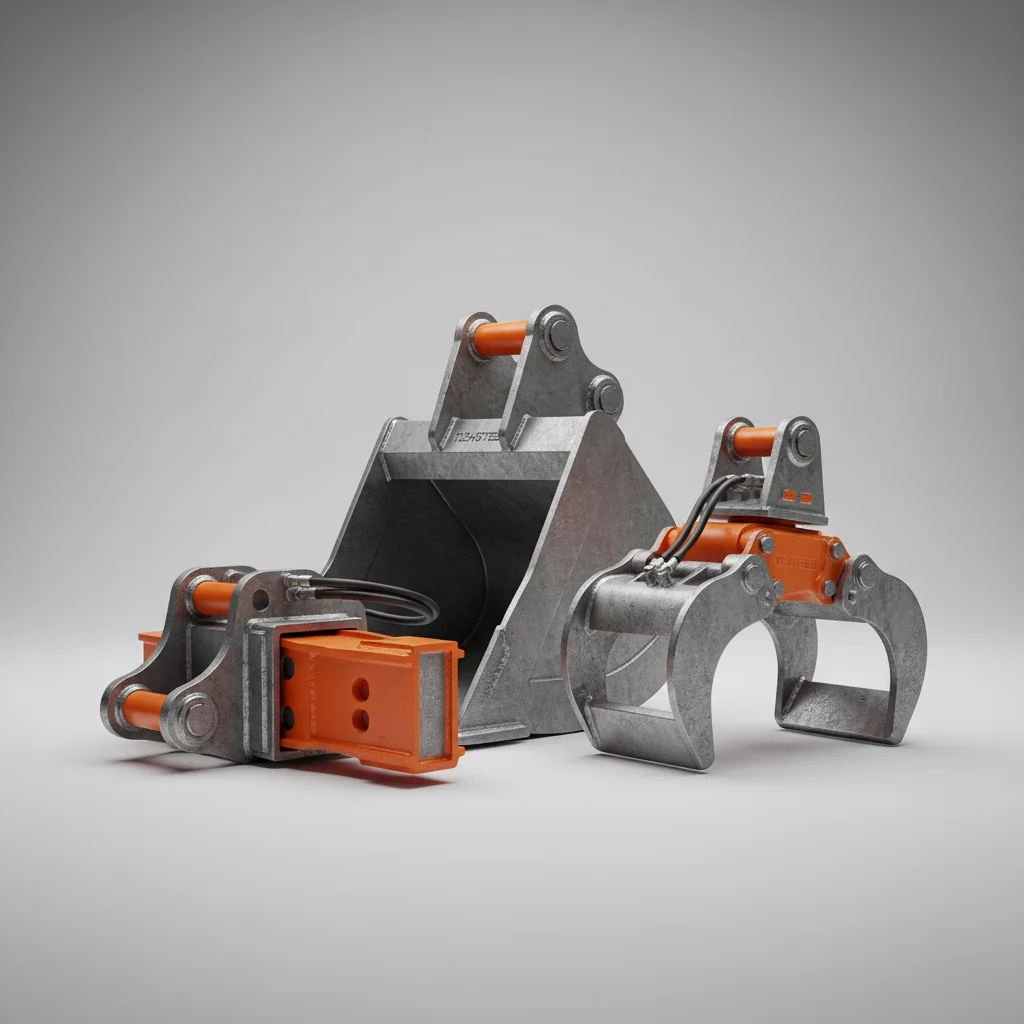
One of the most critical aspects of integrating a digger flail head or GP bucket into a fleet is the ease of attachment. To accommodate various excavator brands and backhoe loaders, manufacturers offer multiple mounting styles, including Wedge Lock, Pin-on, and S-Style. This variety ensures that regardless of the quick coupler currently installed on the machine, the attachment can be swapped in minutes.
This versatility is particularly beneficial for contractors who manage multiple job sites with different machine brands. By having attachments that match perfectly across various platforms, operators can optimize their equipment usage and avoid the costly necessity of purchasing brand-specific tools for every single unit in their inventory.
Furthermore, the ability to quickly transition from a standard digging bucket to a specialized tool allows for a more streamlined workflow. When a project moves from rough grading to more precise soil removal, the compatibility of the coupler ensures that there is no significant downtime, maintaining the momentum of the construction schedule.
Operational Applications for the Digger Flail Head
The utility of a digger flail head or general-purpose bucket extends across a wide spectrum of light-duty work conditions. These tools are designed to handle moderately abrasive materials, making them the go-to choice for digging in dirt, sand, and topsoil. Their versatility allows them to function as the standard attachment for small to medium-sized excavators.
In more challenging terrains, the digger flail head context of general digging involves managing loam, gravel, clay, and silt. Even in frost-covered soil or ground with loose stones, the blunt-tooth design of the GP bucket allows for efficient penetration and material removal without risking the structural failure of the tool.
Whether it is used for trenching, landscaping, or site preparation, the adaptability of these attachments ensures that operators can tackle various tasks with a single piece of equipment. By choosing the right size and material grade, the digger flail head application ensures maximum productivity across diverse geological conditions.
Performance Metrics of Digger Flail Head Attachments
Evaluating the performance of a digger flail head or excavation bucket requires a look at several key indicators: penetration speed, volume capacity, and wear rate. A well-designed bucket minimizes the hydraulic effort required by the excavator, allowing for faster cycle times and lower fuel consumption per cubic meter of material moved.
The balance between weight and strength is also paramount. Using high-strength steels like Hardox allows for thinner, lighter bucket walls without sacrificing durability. This weight reduction increases the payload capacity of the excavator and reduces the stress on the boom and arm, leading to longer machine life.
Performance Comparison of Digger Flail Head Variants
Ground Engaging Tools and Wear Resistance
The efficiency of a digger flail head or GP bucket is largely determined by its Ground Engaging Tools (G.E.T.). CAT J series teeth and adapters are now standard on many high-quality buckets, providing a reliable interface that can be easily replaced as they wear down. These tools are the first point of contact with the earth, absorbing the brunt of the abrasive forces.
Beyond the standard offerings, various G.E.T. options from brands like ESCO, Komatsu, and Volvo are available to meet specific project requirements. Whether the job requires aggressive penetration in hard-packed clay or a smoother edge for grading, the ability to customize the teeth and adapters ensures that the digger flail head maintains its performance over thousands of hours of operation.
Economic Impact of High-Grade Excavator Tools
Investing in a premium digger flail head or excavator bucket is not just about durability; it is a strategic financial decision. Lower-grade buckets may have a lower initial purchase price, but they often lead to higher operational costs due to frequent repairs, replacements, and machine downtime.
High-grade materials like Hardox 450 significantly extend the interval between maintenance cycles. This translates to fewer labor hours spent on repairs and more hours spent on active production. For large-scale construction firms, this increase in uptime can lead to significant savings in project overhead and a faster return on investment.
Additionally, the resale value of equipment fitted with recognized, high-quality attachments remains higher. When a fleet is upgraded, buckets and digger flail head tools made from superior steel are more desirable on the secondary market, further offsetting the initial cost of the equipment.
Future Innovations in Digger Flail Head Technology
The future of the digger flail head and general excavation tools is moving toward "intelligent" attachments. We are seeing the integration of wear-sensors that can alert operators when teeth have worn down to a critical level, allowing for preemptive replacement before the bucket shell itself begins to suffer damage.
Material science is also evolving, with the development of nano-structured alloys that offer even higher abrasion resistance than current Hardox standards. These new materials will allow for even lighter attachments that can handle more aggressive materials, further increasing the efficiency of electric and hybrid excavators that prioritize energy conservation.
Furthermore, the push toward automation is leading to the design of buckets and digger flail head tools that are optimized for robotic control. This involves more precise geometry to ensure consistent material loading and reduced spill, maximizing the efficiency of every single scoop.
Analysis of Digger Flail Head Material and Application Suitability
| Material Grade |
Abrasion Resistance |
Recommended Application |
Life Expectancy Score |
| Q355 Standard |
Low-Medium |
Soft Soil / Sand |
5/10 |
| NM400 Cost-Effective |
Medium |
Clay / Loam |
6/10 |
| Q690 High-Strength |
High |
Loose Rock / Gravel |
8/10 |
| Hardox 450 Premium |
Very High |
Abrasive Mining / Rock |
10/10 |
| Custom Wear-Plate |
Extreme |
Quarrying / Demolition |
9/10 |
| Composite Alloy |
High |
Mixed Terrain |
7/10 |
FAQS
For sandy soil or light-duty work, Q355 or NM400 steel is generally sufficient. These materials provide excellent cost-effectiveness for applications where abrasion is minimal, ensuring you don't overspend on high-tensile steel that isn't required for the job's specific geological conditions.
Yes, provided the mounting style matches. We offer Wedge Lock, Pin-on, and S-Style configurations to ensure that high-performance buckets are compatible with various excavator and backhoe loader brands, allowing for seamless integration into your existing fleet.
CAT J series teeth are industry-standard for their reliability and ease of replacement. By using these as standard, we ensure that operators can find replacement parts easily and maintain optimal penetration and cutting efficiency without extensive downtime.
Wedge Locks are typically faster for quick changes, whereas Pin-on is a traditional, highly secure method. Your choice should depend on how often you switch attachments; if you change tools multiple times a day, a Wedge Lock or S-Style is highly recommended for productivity.
Yes, general-purpose buckets are designed for a wide range of applications, including frost-covered soil. When paired with high-strength steel like Q690, they can effectively penetrate frozen ground and loose rock without compromising the structural integrity of the bucket.
Regularly inspecting the G.E.T. parts (teeth and adapters) is the most important maintenance task. Replacing worn teeth promptly prevents the main bucket shell from wearing down, significantly extending the lifespan of the attachment and maintaining digging efficiency.
Conclusion
In summary, the selection of a digger flail head or general-purpose bucket involves a critical balance of material science, coupler compatibility, and application-specific needs. By opting for high-grade steels like Hardox 450 and utilizing standardized G.E.T. parts, operators can drastically reduce maintenance costs and increase the efficiency of their excavation projects. The versatility of these tools ensures they remain indispensable in any construction or mining fleet.
Looking forward, the integration of smarter materials and automated compatibility will further revolutionize how we approach land clearing and excavation. We recommend that contractors evaluate their specific soil conditions and machine usage patterns to choose the most cost-effective material grade. For those seeking reliability and peak performance, investing in premium attachments is the most sustainable path to long-term profitability. Visit our website for more professional solutions: www.crafts-mfg.com