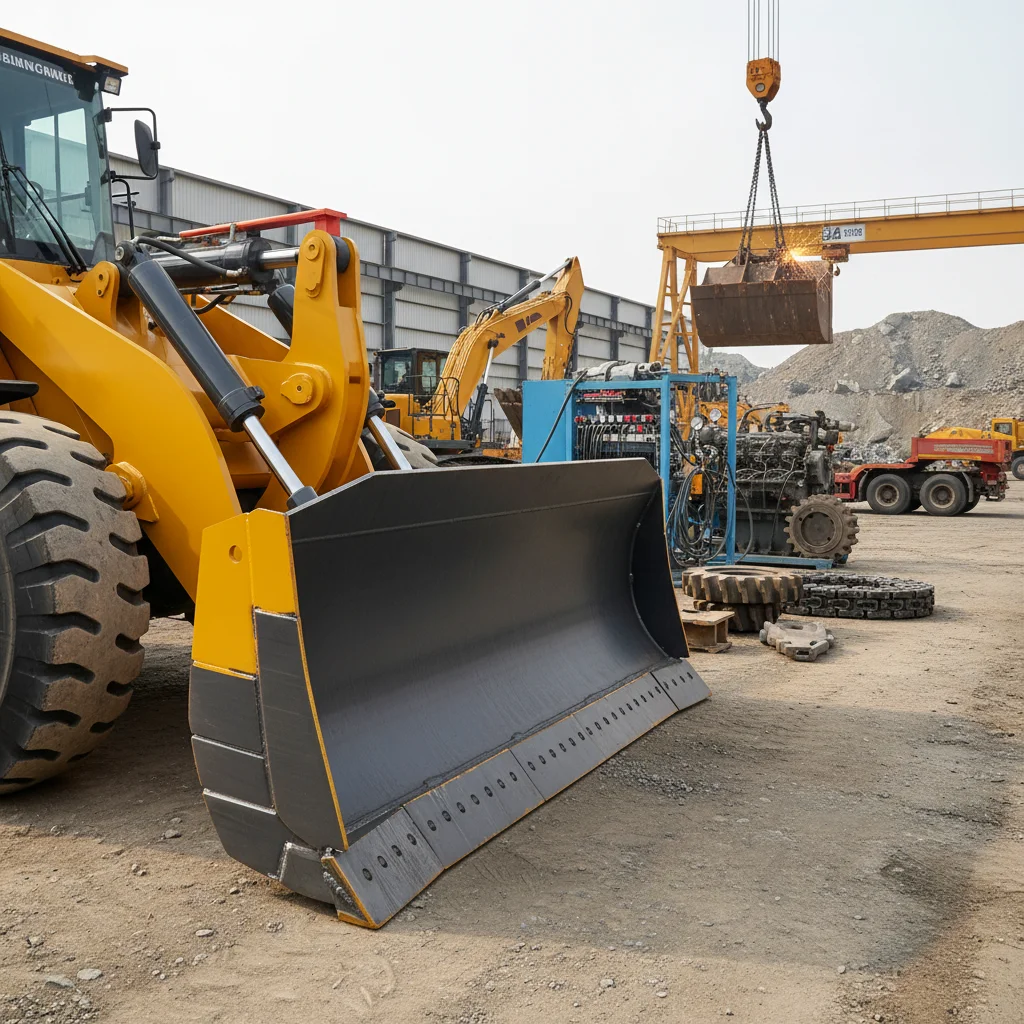
In the demanding world of heavy construction and demolition, the efficiency of a project often hinges on the versatility of the machinery used. A backhoe hydraulic breaker transforms a standard digging machine into a powerful demolition tool, allowing operators to break through reinforced concrete, asphalt, and hard rock without switching vehicles.
Global infrastructure growth, particularly in rapidly urbanizing regions, has increased the demand for attachments that maximize machine uptime. By integrating a hydraulic hammer into a backhoe, contractors can handle diverse tasks—from trenching to breaking—on a single platform, significantly reducing transport costs and project timelines.
Understanding the nuances of selecting and maintaining a backhoe hydraulic breaker is essential for ensuring long-term reliability and operator safety. Whether for municipal roadwork or large-scale mining projects, the right breaker ensures that the toughest materials yield efficiently, maintaining a steady workflow in the most challenging environments.

Global Relevance of Backhoe Hydraulic Breakers
The global construction machinery market has seen a paradigm shift toward multi-functional attachments. With the World Bank reporting a surge in urban infrastructure investment across Southeast Asia and Africa, the backhoe hydraulic breaker has become an indispensable tool for rapid urban redevelopment. These tools allow for the surgical removal of old structures, minimizing the need for explosive demolition in densely populated areas.
Furthermore, adhering to ISO standards for hydraulic safety and power output, modern breakers have evolved to offer higher impact energy with lower fuel consumption. This global standardization ensures that a breaker manufactured in one region can be seamlessly integrated into a backhoe of another brand, facilitating international trade and project scalability.
Defining the Backhoe Hydraulic Breaker System
In simple terms, a backhoe hydraulic breaker is a powerful percussion tool powered by the hydraulic system of a backhoe loader. It converts the fluid energy of the machine's hydraulic oil into mechanical impact energy, driving a chisel or tool bit into hard materials to fracture them. Unlike pneumatic hammers, these hydraulic systems provide consistent force and higher efficiency, making them the gold standard for professional demolition.
Beyond mere destruction, these tools address critical humanitarian and industrial needs. In post-disaster relief, such as after earthquakes, the ability to quickly clear rubble and breach concrete slabs is a matter of life and death. The adaptability of the backhoe—combining a loader and an excavator—makes the breaker attachment a versatile asset for search and rescue operations where agility is as important as power.
Technically, the system consists of a housing, a piston, and a tool bit. When the operator activates the valve, high-pressure oil pushes the piston, which strikes the tool bit with immense force. This cyclical process allows for the rapid breakdown of granite, limestone, and reinforced concrete, transforming a slow manual process into a streamlined industrial operation.
Core Components and Engineering Factors
The durability of a backhoe hydraulic breaker depends heavily on the quality of its alloys. High-grade forged steel is used for the piston and cylinder to withstand the extreme repetitive stress of high-frequency impacts, ensuring the tool doesn't crack under pressure during prolonged use.
Cost efficiency is achieved through the optimization of the strike frequency and impact energy. By balancing the hydraulic flow from the backhoe with the internal valve timing of the breaker, manufacturers can maximize material breakage while minimizing wear and tear on the machine's hydraulic pumps.
Scalability and compatibility are also key engineering factors. Modern breakers are designed with adjustable mounting brackets and universal hydraulic couplings, allowing them to be fitted onto various backhoe models regardless of the manufacturer, thus increasing the asset value for the equipment owner.
Global Applications and Industry Use Cases
Across the globe, the application of the backhoe hydraulic breaker spans multiple sectors. In the mining industry, they are used for secondary breaking to reduce the size of boulders before they enter the crusher. In municipal roadwork, they are the primary tool for removing old curbs, sidewalks, and asphalt layers during urban renewal projects in cities like New York, London, and Tokyo.
In remote industrial zones, these tools are utilized for the installation of pipelines and cables, where hard rock outcrops would otherwise require expensive blasting. For example, in the mountainous regions of the Andes or the Alps, the precision of a hydraulic breaker allows for trenching without causing destabilizing vibrations to the surrounding slopes.
Operational Performance of Different Backhoe Hydraulic Breaker Types
Long-Term Value and Operational Advantages
The long-term value of investing in a high-quality backhoe hydraulic breaker lies in the drastic reduction of labor costs. Manual breaking is not only slow but presents significant health and safety risks to workers. By automating the process, companies ensure a safer job site, reducing the likelihood of workplace injuries and the associated insurance liabilities.
Furthermore, the reliability of these tools builds trust with clients. When a contractor can guarantee the removal of a concrete foundation within a specific timeframe, it enhances their professional reputation. The emotional peace of mind for the operator—knowing they have a tool that won't fail mid-job—translates into higher productivity and better overall project management.
Future Trends in Demolition Technology
The industry is currently moving toward "intelligent" demolition. We are seeing the integration of digital sensors into the backhoe hydraulic breaker that can monitor impact force and tool wear in real-time. This data is transmitted to the operator's cabin, alerting them when the tool bit needs replacement, thereby preventing catastrophic failure and unplanned downtime.
Sustainability is another driving force. Newer models are focusing on noise reduction and vibration dampening, allowing for demolition work in residential areas during night shifts without violating city ordinances. The development of "silent" hydraulic breakers is a key trend in the push for greener, less intrusive urban construction.
Automation and remote operation are also on the horizon. With the rise of 5G and remote-control systems, operators can now control a breaker-equipped backhoe from a safe distance, especially in hazardous environments like unstable mines or radioactive cleanup sites, significantly enhancing human safety.
Overcoming Common Operational Challenges
One of the most common challenges is "blank firing," where the piston strikes without the tool bit being pressed against a surface. This can lead to internal damage to the breaker. The solution lies in utilizing modern breakers with auto-stop features or training operators to ensure constant contact with the material before activating the hammer.
Another hurdle is hydraulic overheating. Because the breaker requires high-pressure bursts, it can heat up the backhoe's hydraulic oil. Implementing high-capacity oil coolers and using high-viscosity index oils can mitigate this risk, ensuring the system remains stable even during 10-hour shifts in hot climates.
Lastly, improper tool bit selection often leads to inefficiency. Using a pointed bit on flat concrete or a blunt bit on hard rock reduces productivity. We recommend a strategic approach to tool selection based on material hardness and the required fracture pattern.
Comparative Analysis of Breaker Maintenance and Performance
| Maintenance Level | Impact on Lifespan | Operational Cost | Output Efficiency |
|---|
| Negligent | Low (1-3 years) | High (Frequent repairs) | 4/10 |
| Basic Greasing | Medium (3-5 years) | Moderate | 6/10 |
| Scheduled Overhauls | High (6-10 years) | Controlled | 8/10 |
| Predictive Monitoring | Very High (10+ years) | Optimized | 10/10 |
| Incorrect Tooling | Reduced (2-4 years) | Increased Wear | 5/10 |
| Precision Tuning | High (7-12 years) | Low per Hour | 9/10 |
FAQS
Selection depends on the carrier's hydraulic flow and pressure. You must match the breaker's required oil flow (L/min) and operating pressure (Bar) with the backhoe's specifications. Over-sizing can damage the carrier's pump, while under-sizing will result in poor breaking power. Always consult the machine's manual or a specialist to ensure compatibility.
For most high-intensity applications, greasing the tool bit and bushings every 2 to 4 hours of actual operation is critical. Use high-temperature, molybdenum-based grease to reduce friction and prevent the tool bit from seizing in the bushing, which is a common cause of premature wear.
A pointed bit (Moil point) is best for penetrating hard rock and concrete, concentrating force on a single point. A blunt or chisel bit is designed for breaking materials in a specific direction or creating a wider fracture line, making it ideal for trenching or breaking reinforced slabs.
While highly versatile, the effectiveness depends on the rock's hardness (Mohs scale). For extremely hard igneous rocks, a high-impact, low-frequency breaker is preferred. For softer sedimentary rocks, a higher-frequency breaker is more efficient. Always match the breaker's energy class to the material density.
Power loss is usually attributed to internal seal leakage, worn-out bushings, or contaminated hydraulic oil. When seals fail, the pressure drops, reducing the piston's impact force. Regular hydraulic oil filtration and seal kit replacements every 1,000-2,000 hours are recommended to maintain peak performance.
Yes, but it requires a specific technique. Rebar can cause the tool bit to slide or deflect. Using a chisel-shaped bit helps in "cutting" through the concrete to reach the rebar, which can then be broken or cut. Proper positioning is key to avoid bending the tool bit.
Conclusion
In summary, the backhoe hydraulic breaker is more than just an attachment; it is a force multiplier for construction efficiency. By combining high-impact energy with the versatility of a backhoe loader, it solves the critical problem of material resistance in urban and industrial environments. From its core engineering of forged steel to its application in disaster relief and infrastructure, the breaker remains central to modern demolition.
Looking forward, the integration of IoT monitoring and eco-friendly noise reduction will further refine how we approach demolition. For contractors and fleet managers, the focus should remain on rigorous maintenance and precise tool selection to maximize the lifespan of their equipment. Investing in quality breakers today ensures a safer, faster, and more profitable tomorrow. Visit our website: www.crafts-mfg.com